DINGRAN DAI
ProjectsAboutContact
3D Printed Bamboo Structure
Home/Projects/architecture-fabrication/3D Printed Bamboo Structure

3D Printed Bamboo Structure

Parametric Joints for Modular Bamboo Construction

3D Printing3D ScanningParametric DesignGrasshopperRhinoDigital Fabrication

Year

2024

Location

Shanghai, China

Role

Computational Design

Portfolio

3D Printed Bamboo Structure - Portfolio 1
1/1

Tap to enlarge • Scroll to view

Overview

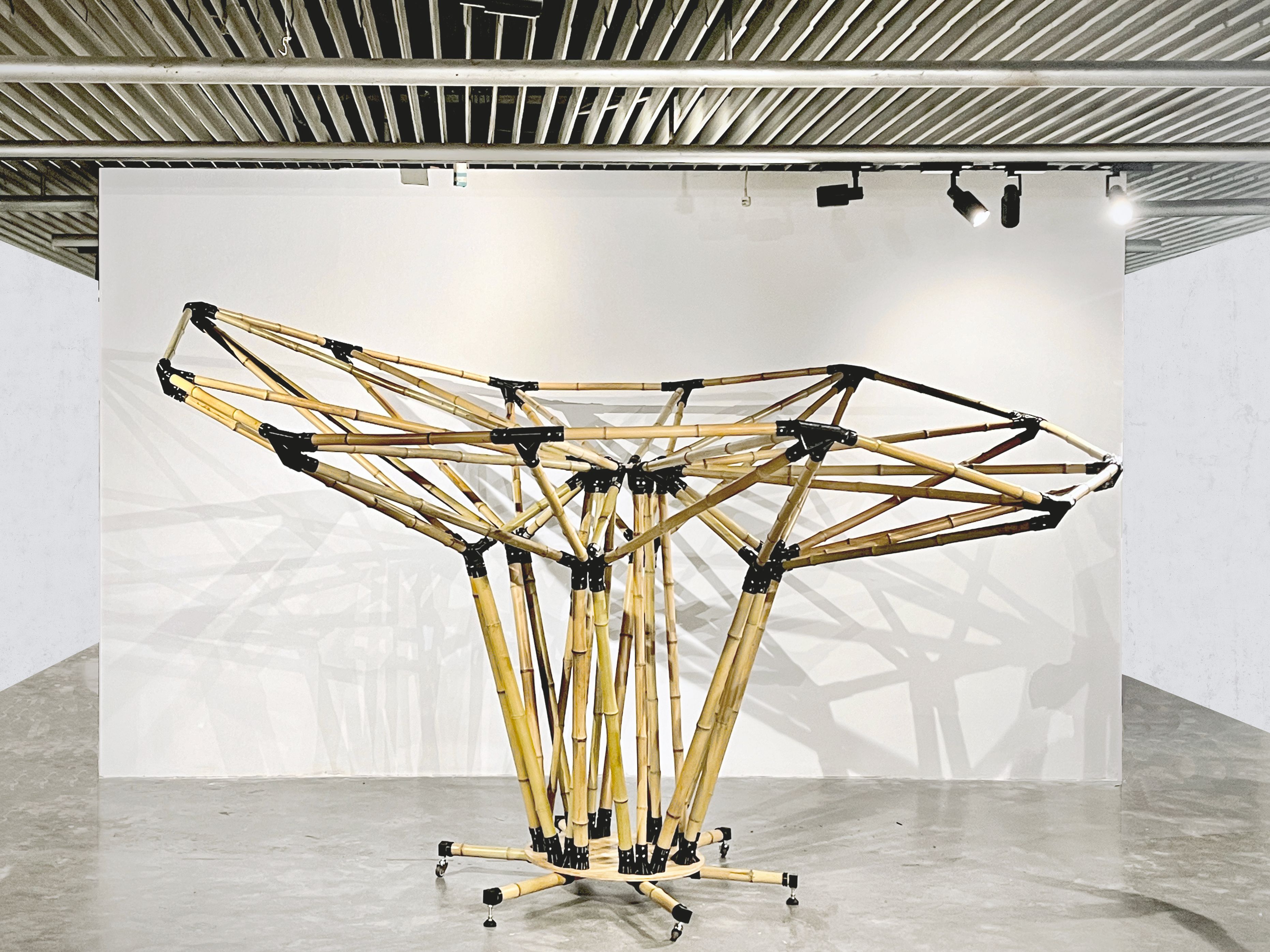
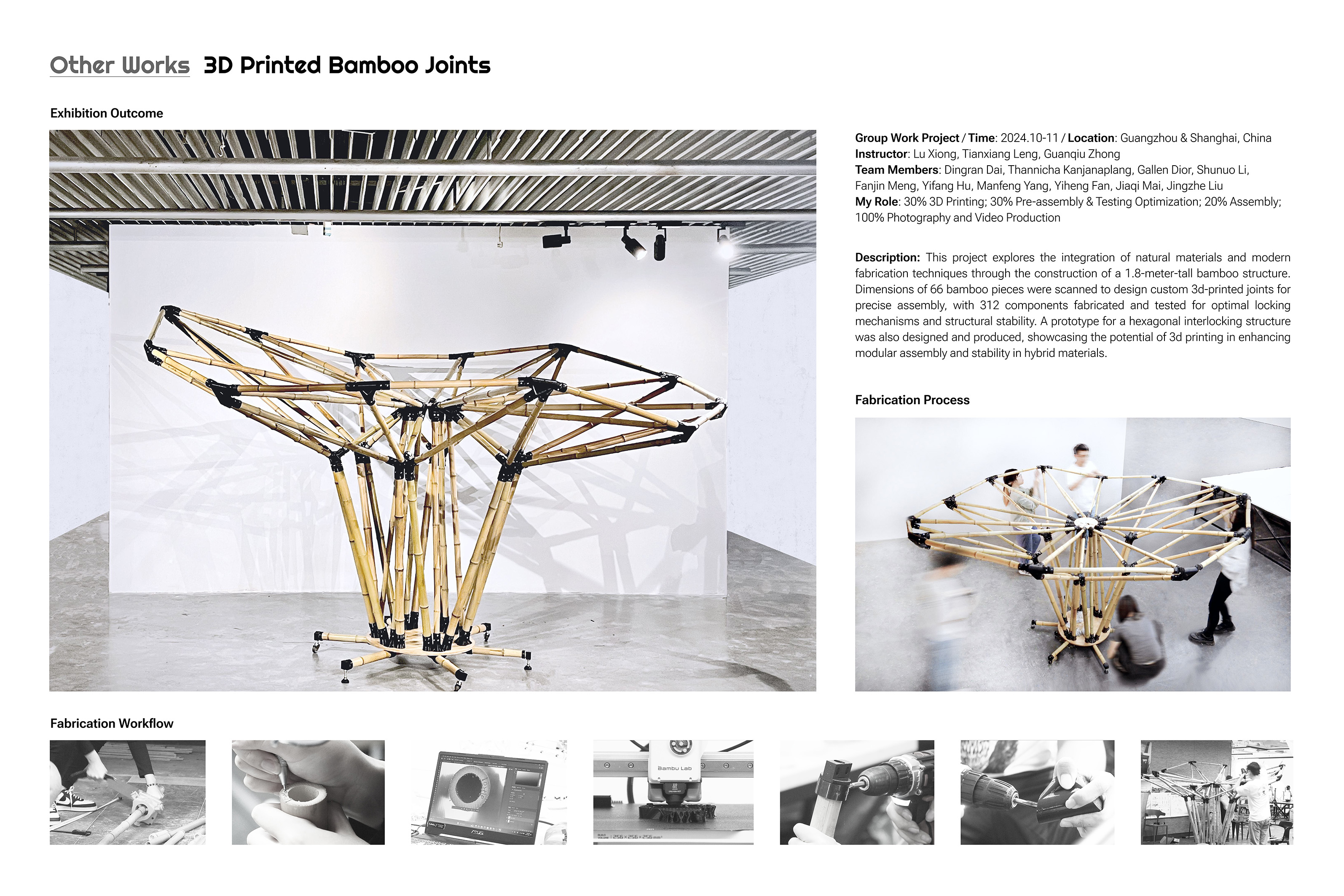
3D Printed Bamboo Structure explores how natural materials can be integrated with digital fabrication techniques through custom-designed, parametric joints.

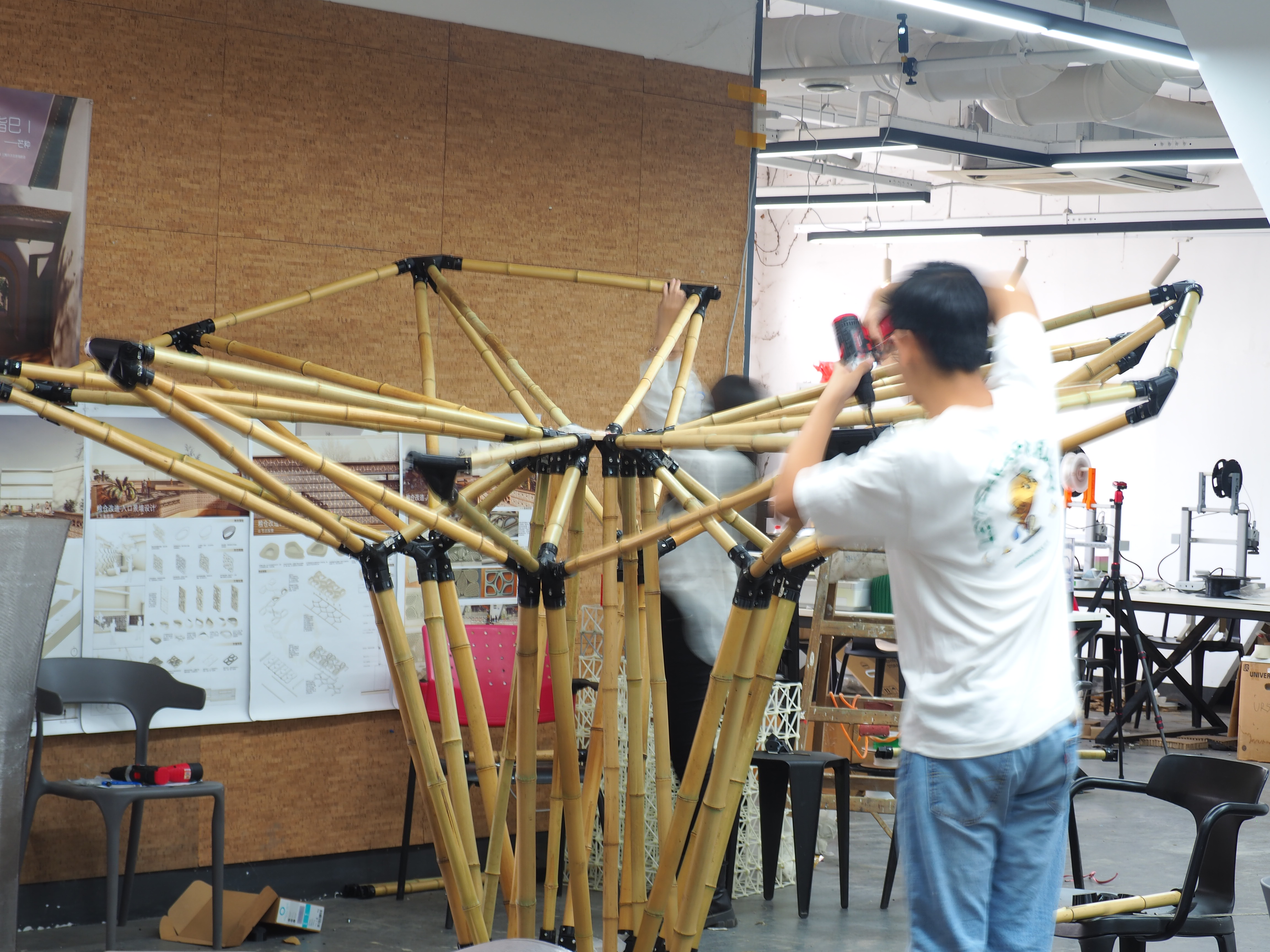
By scanning individual bamboo elements and generating 3D-printed connectors tailored to their unique geometries, the project constructs a 1.8-meter-tall modular bamboo structure. The system demonstrates how computational design can enhance precision, stability, and scalability in hybrid material construction.


Context & Motivation

Bamboo is a lightweight, sustainable material with excellent structural properties, yet its natural variability presents challenges for standardized construction.

Traditional bamboo structures often rely on manual binding or generic connectors, which limits precision, repeatability, and structural optimization. This project investigates the question:

How can digital fabrication compensate for material irregularity while preserving the advantages of natural materials?

By combining material scanning with parametric joint design, the project aims to bridge craftsmanship and computational precision.


Material Analysis & Scanning

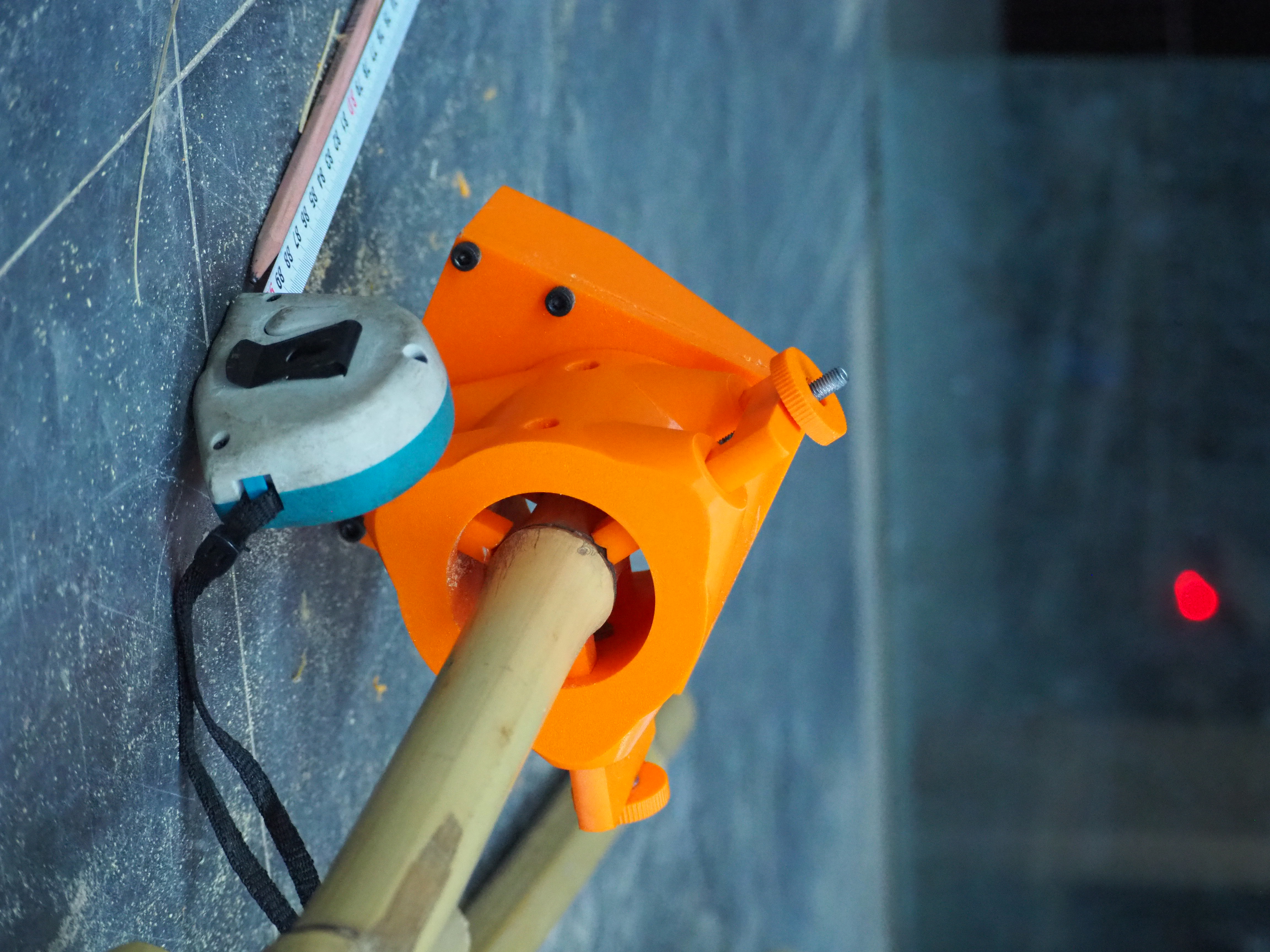
A total of 66 bamboo segments were measured and scanned to capture variations in diameter, curvature, and surface irregularities.

These measurements informed the design of:

  • Connection angles
  • Locking geometries
  • Tolerance ranges for assembly

Rather than forcing bamboo into standardized dimensions, the system adapts the joint geometry to each individual element.


Joint Design & Fabrication

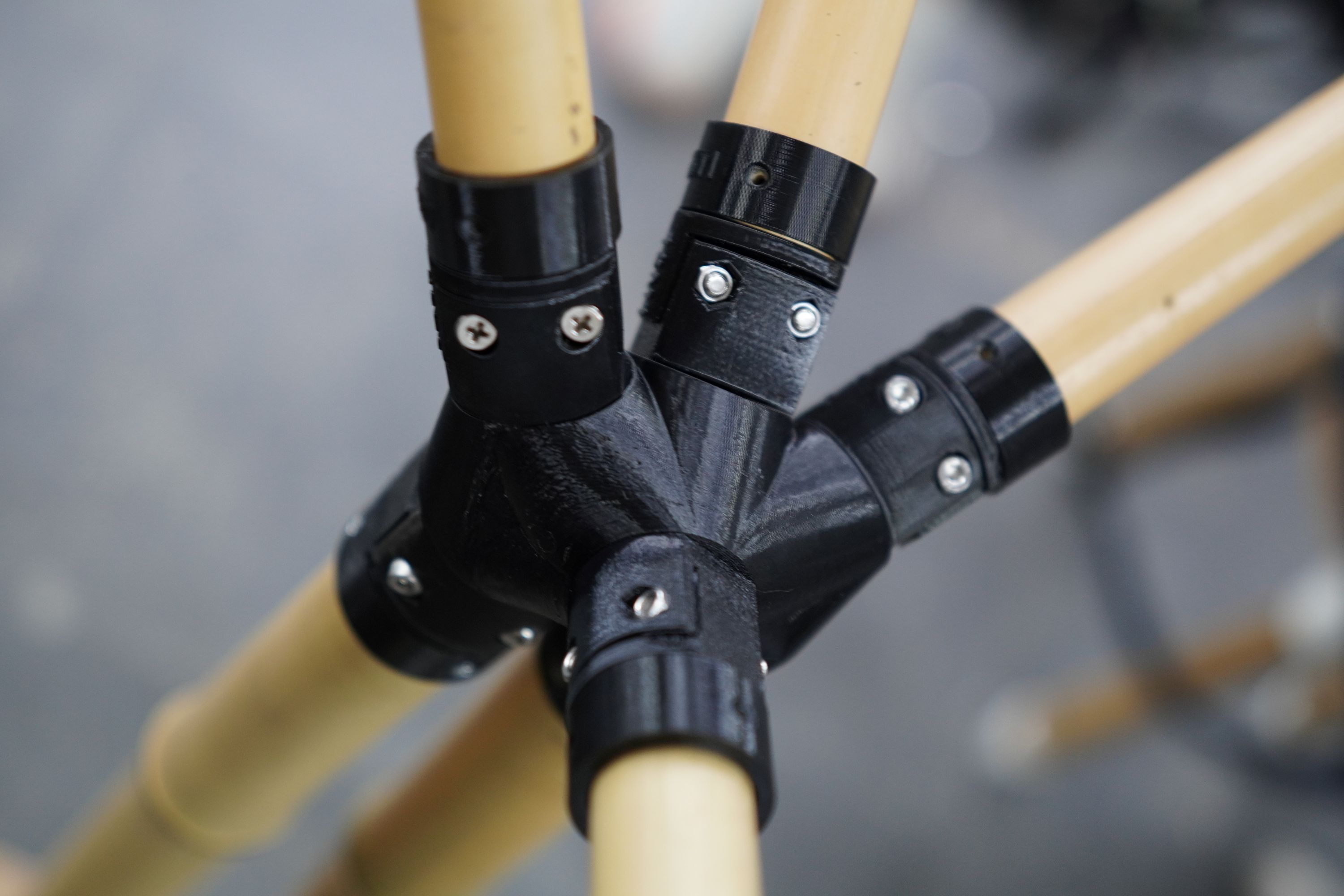
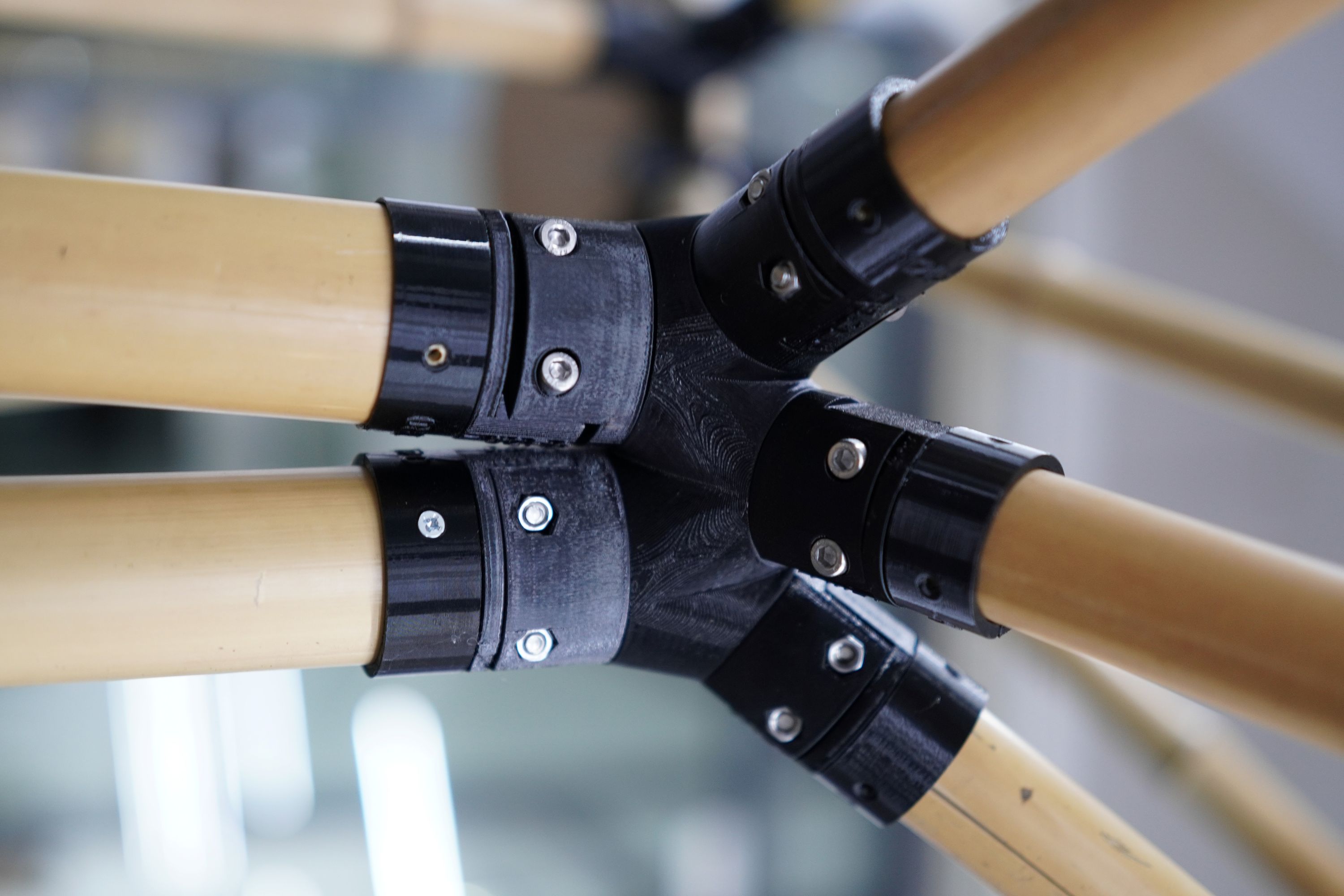
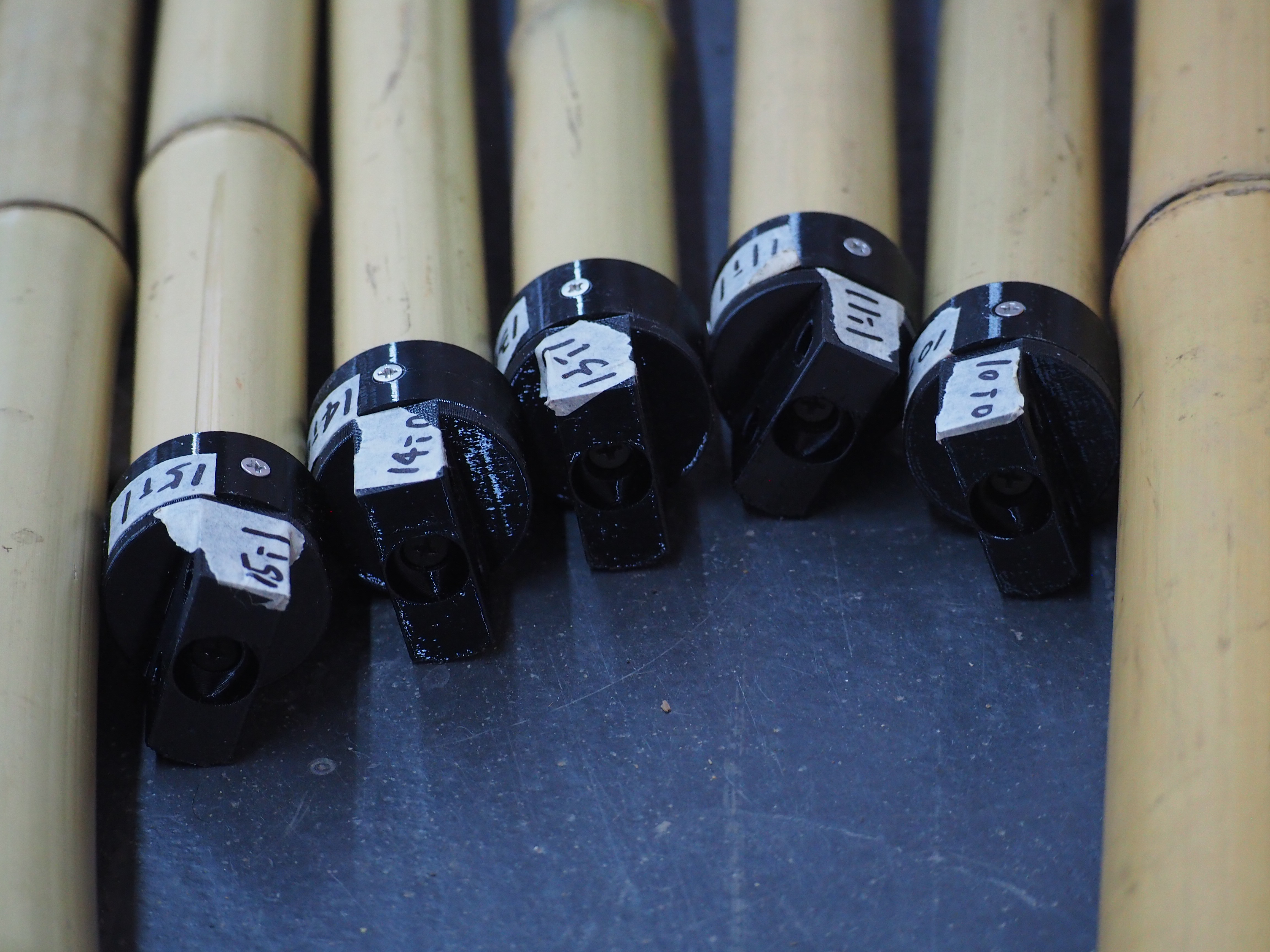
Based on the scanned data, custom 3D-printed joints were generated using a parametric workflow.

Key design considerations included:

  • Secure locking under load
  • Ease of assembly and disassembly
  • Structural continuity across multiple members

In total, 312 joint components were fabricated and tested to evaluate fit, strength, and repeatability.


Structural System

The final structure reaches 1.8 meters in height and demonstrates a modular assembly logic that can be extended or reconfigured.

In parallel, a hexagonal interlocking prototype was developed to explore alternative aggregation strategies. This variation highlights the system’s flexibility and potential for larger-scale architectural applications.

The structural system emphasizes:

  • Modularity
  • Material efficiency
  • Constructability through repetition

Assembly & Prototyping

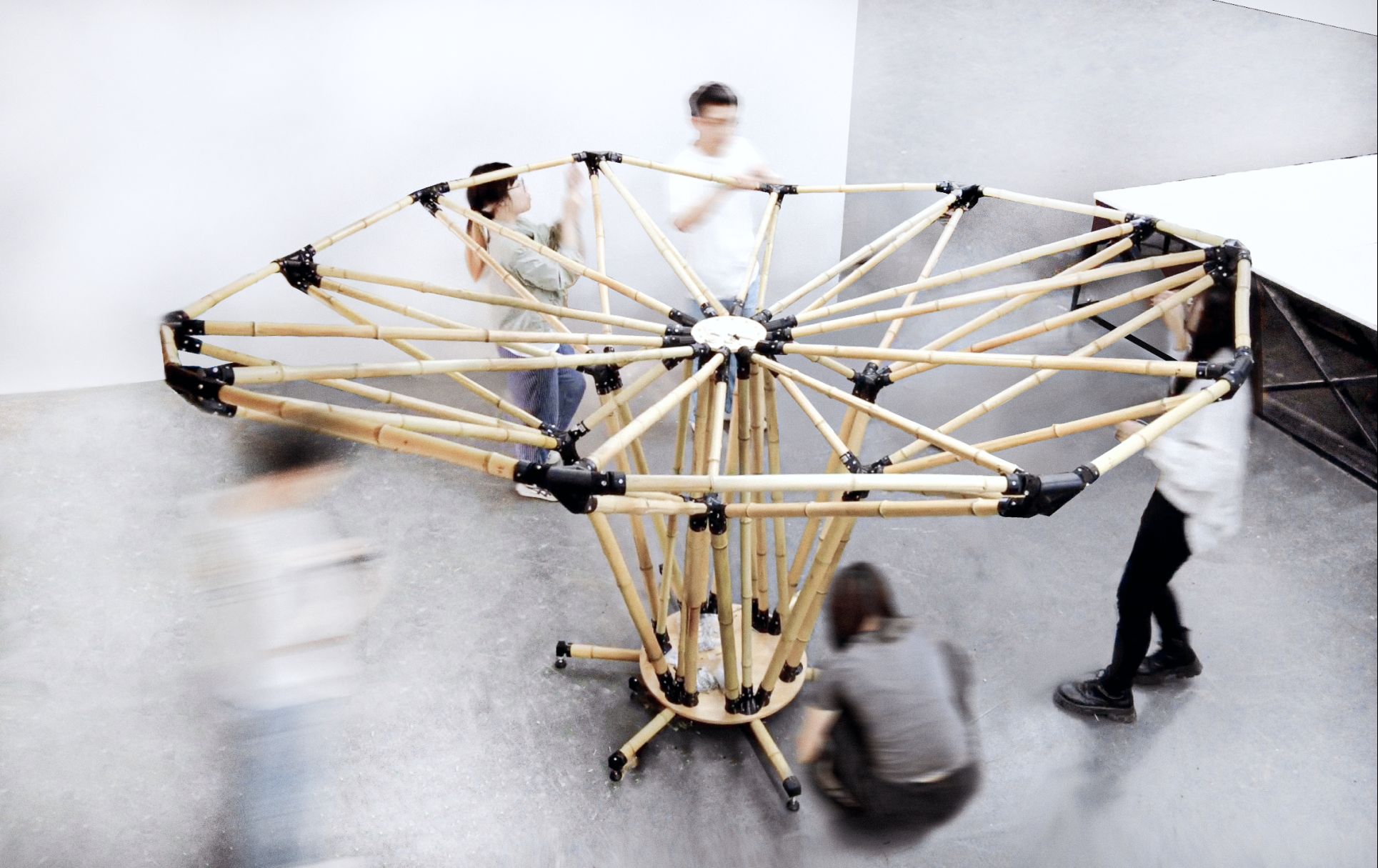
The construction process validated the effectiveness of the joint system through hands-on assembly.

Physical testing revealed:

  • Improved stability compared to conventional bamboo binding methods
  • Consistent alignment across complex joint intersections
  • Reduced construction error despite material irregularities

The prototype confirms that digital joints can significantly enhance the structural performance of natural materials.


Outcome

The project resulted in:

  • A full-scale bamboo structural prototype
  • A parametric joint system adaptable to varying material conditions
  • A fabrication workflow combining scanning, computation, and physical assembly

The work demonstrates how digital fabrication can enable sustainable construction methods without sacrificing material authenticity.


Reflection

This project reshaped my understanding of fabrication as a negotiation between material behavior and computational control.

Key insights include:

  • Embracing material variability rather than eliminating it
  • Parametric systems can enhance, not replace, craftsmanship
  • Hybrid material construction benefits from tight integration between design and fabrication

Future work could explore structural simulation, load testing, and scaling the system for architectural deployment.
Home/Projects/architecture-fabrication/3D Printed Bamboo Structure

3D Printed Bamboo Structure

Parametric Joints for Modular Bamboo Construction

3D Printing3D ScanningParametric DesignGrasshopperRhinoDigital Fabrication

Year

2024

Location

Shanghai, China

Role

Computational Design, Fabrication, Structural Prototyping

Overview

3D Printed Bamboo Structure explores how natural materials can be integrated with digital fabrication techniques through custom-designed, parametric joints.

By scanning individual bamboo elements and generating 3D-printed connectors tailored to their unique geometries, the project constructs a 1.8-meter-tall modular bamboo structure. The system demonstrates how computational design can enhance precision, stability, and scalability in hybrid material construction.


Context & Motivation

Bamboo is a lightweight, sustainable material with excellent structural properties, yet its natural variability presents challenges for standardized construction.

Traditional bamboo structures often rely on manual binding or generic connectors, which limits precision, repeatability, and structural optimization. This project investigates the question:

How can digital fabrication compensate for material irregularity while preserving the advantages of natural materials?

By combining material scanning with parametric joint design, the project aims to bridge craftsmanship and computational precision.


Material Analysis & Scanning

A total of 66 bamboo segments were measured and scanned to capture variations in diameter, curvature, and surface irregularities.

These measurements informed the design of:

  • Connection angles
  • Locking geometries
  • Tolerance ranges for assembly

Rather than forcing bamboo into standardized dimensions, the system adapts the joint geometry to each individual element.


Joint Design & Fabrication

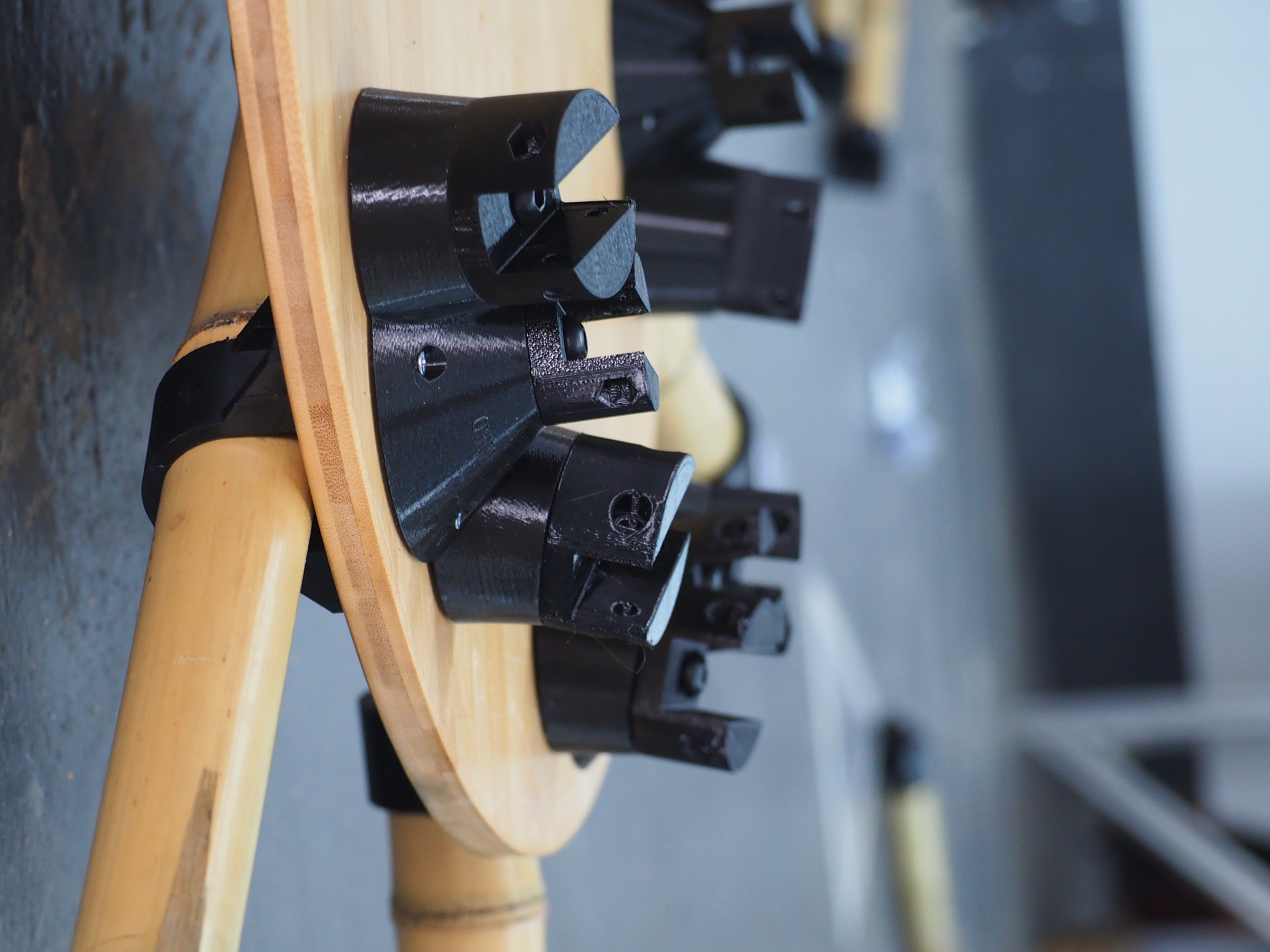
Based on the scanned data, custom 3D-printed joints were generated using a parametric workflow.

Key design considerations included:

  • Secure locking under load
  • Ease of assembly and disassembly
  • Structural continuity across multiple members

In total, 312 joint components were fabricated and tested to evaluate fit, strength, and repeatability.


Structural System

The final structure reaches 1.8 meters in height and demonstrates a modular assembly logic that can be extended or reconfigured.

In parallel, a hexagonal interlocking prototype was developed to explore alternative aggregation strategies. This variation highlights the system’s flexibility and potential for larger-scale architectural applications.

The structural system emphasizes:

  • Modularity
  • Material efficiency
  • Constructability through repetition

Assembly & Prototyping

The construction process validated the effectiveness of the joint system through hands-on assembly.

Physical testing revealed:

  • Improved stability compared to conventional bamboo binding methods
  • Consistent alignment across complex joint intersections
  • Reduced construction error despite material irregularities

The prototype confirms that digital joints can significantly enhance the structural performance of natural materials.


Outcome

The project resulted in:

  • A full-scale bamboo structural prototype
  • A parametric joint system adaptable to varying material conditions
  • A fabrication workflow combining scanning, computation, and physical assembly

The work demonstrates how digital fabrication can enable sustainable construction methods without sacrificing material authenticity.


Reflection

This project reshaped my understanding of fabrication as a negotiation between material behavior and computational control.

Key insights include:

  • Embracing material variability rather than eliminating it
  • Parametric systems can enhance, not replace, craftsmanship
  • Hybrid material construction benefits from tight integration between design and fabrication

Future work could explore structural simulation, load testing, and scaling the system for architectural deployment.
Portfolio

3D Printed Bamboo Structure - Portfolio 1

Gallery

Gallery

3D Printed Bamboo Structure - Gallery 1
3D Printed Bamboo Structure - Gallery 2
3D Printed Bamboo Structure - Gallery 3
3D Printed Bamboo Structure - Gallery 4
3D Printed Bamboo Structure - Gallery 5
3D Printed Bamboo Structure - Gallery 6
3D Printed Bamboo Structure - Gallery 7
Keep exploring

Related Projects

View all projects
01Other work
2024
Encoded Elevation

Creative Media

Encoded Elevation

Human–Machine Collaborative Construction from 2D Elevation Patterns

Parametric DesignDigital FabricationGrasshopper
02Same area
2023
River Life Museum in Xiguan

Architecture & Fabrication

River Life Museum in Xiguan

Architecture as a Cultural Memory of Guangzhou’s Waterways

Rhino3D Scanning
03Other work
2023
Ironic Shaxi

Creative Media

Ironic Shaxi

Urban Interaction and Critical Spatial Narrative

3D ScanningRhino

© 2026 Dingran Dai. All rights reserved.

← Back to Projects