Huanshi East City Renewal Design is an urban renewal proposal addressing the challenges of high-density city life in Guangzhou.
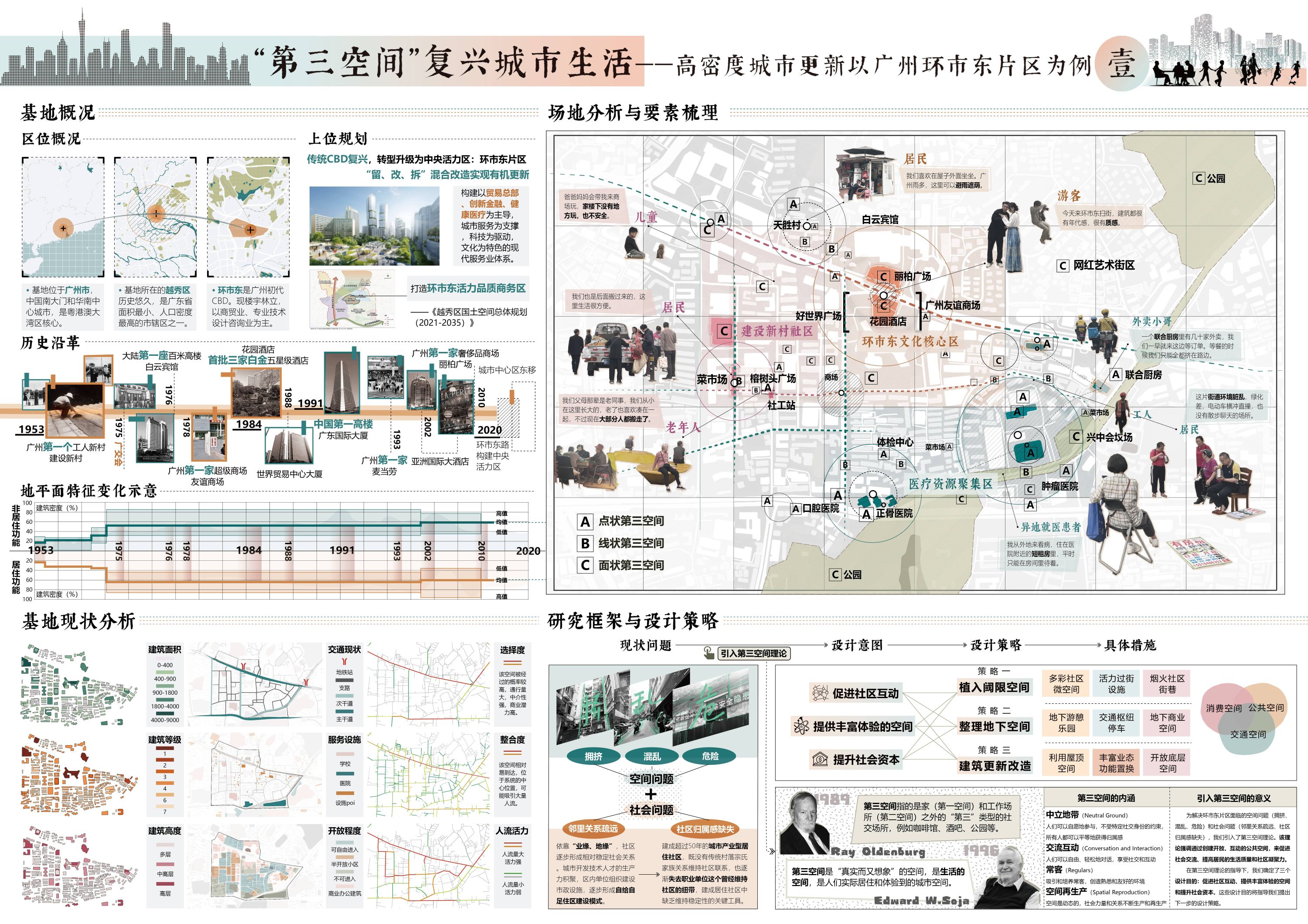
The project focuses on revitalizing an aging urban district through a series of spatial strategies centered on the concept of the “Third Space”—public and semi-public environments that support everyday social interaction beyond home and work. By integrating urban morphology, circulation, and public amenities, the design aims to enhance livability while respecting the area’s historical context.
The Huanshi East area is characterized by:
- High building density
- Fragmented public spaces
- Aging infrastructure
- Limited pedestrian connectivity
While the district plays a significant role in the city’s economic and cultural life, its spatial structure no longer adequately supports contemporary urban living. The project responds to these challenges through multi-scalar analysis and strategic spatial intervention.
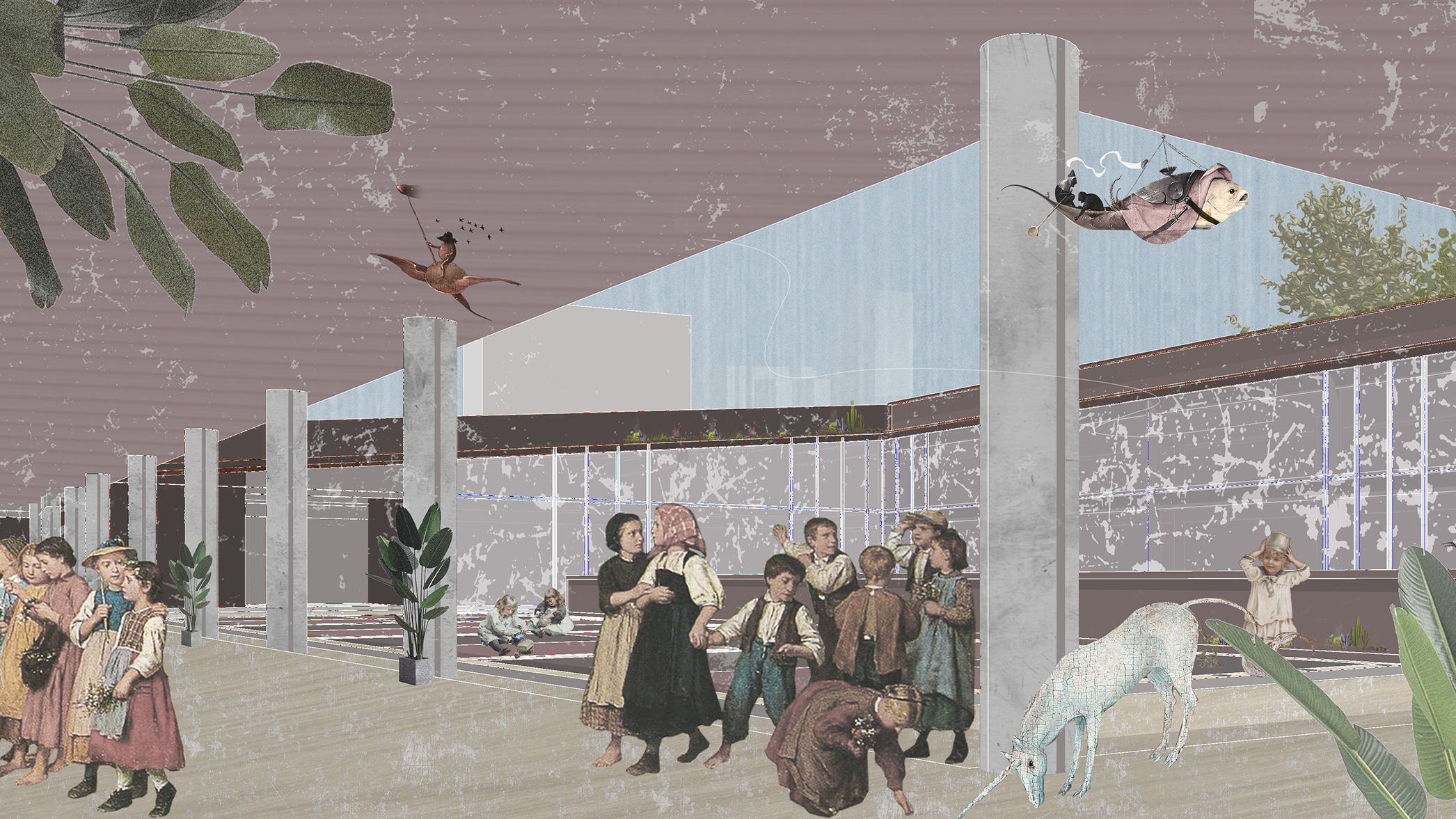
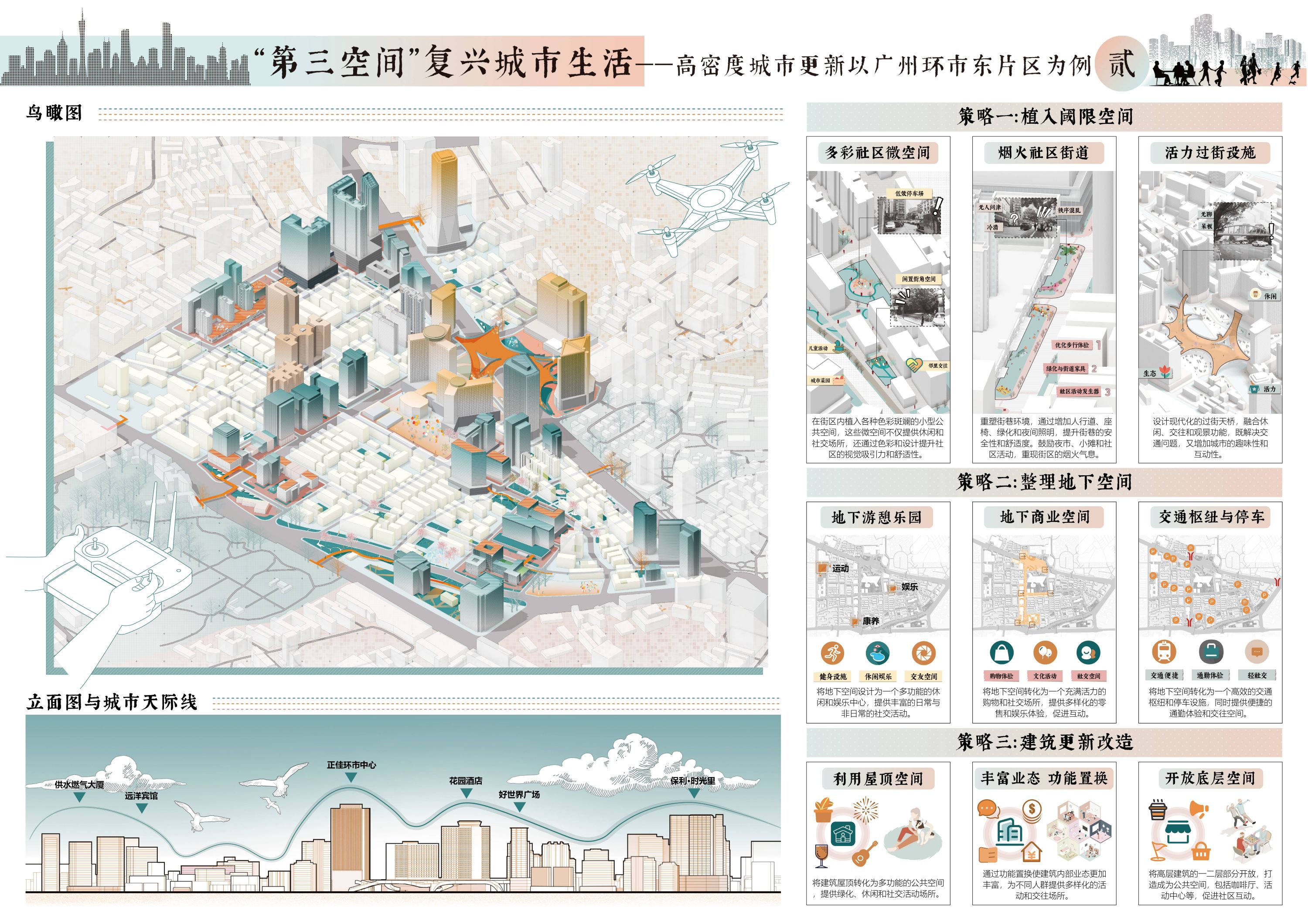
The proposal introduces a network of Third Spaces to activate underutilized urban areas and improve everyday urban experience.
Key principles include:
- Creating vibrant micro public spaces within dense blocks
- Enhancing pedestrian priority and street-level accessibility
- Integrating cultural, recreational, and community-oriented programs
These spaces function as social connectors, fostering interaction and encouraging prolonged public use.
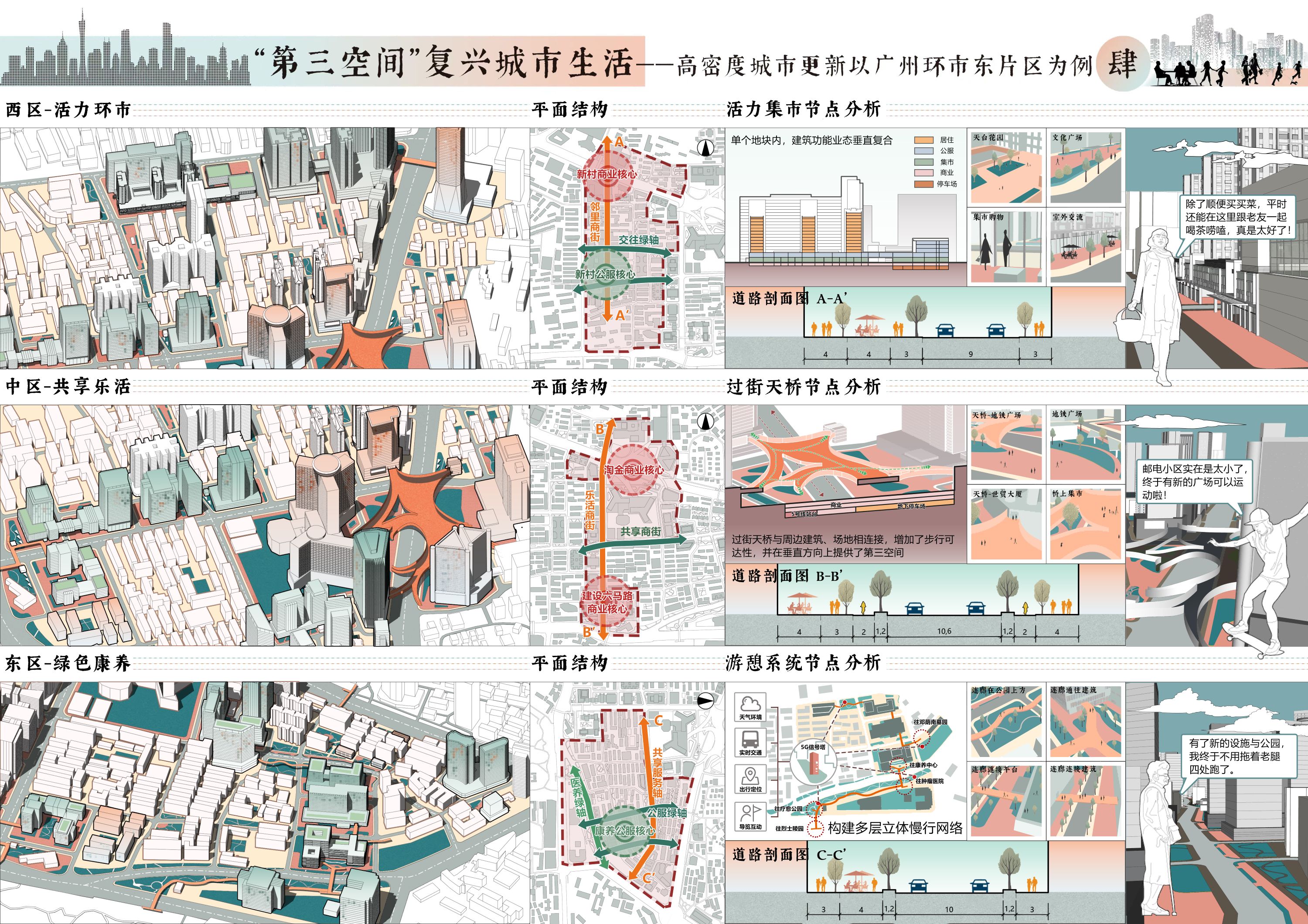
Urban Connectivity
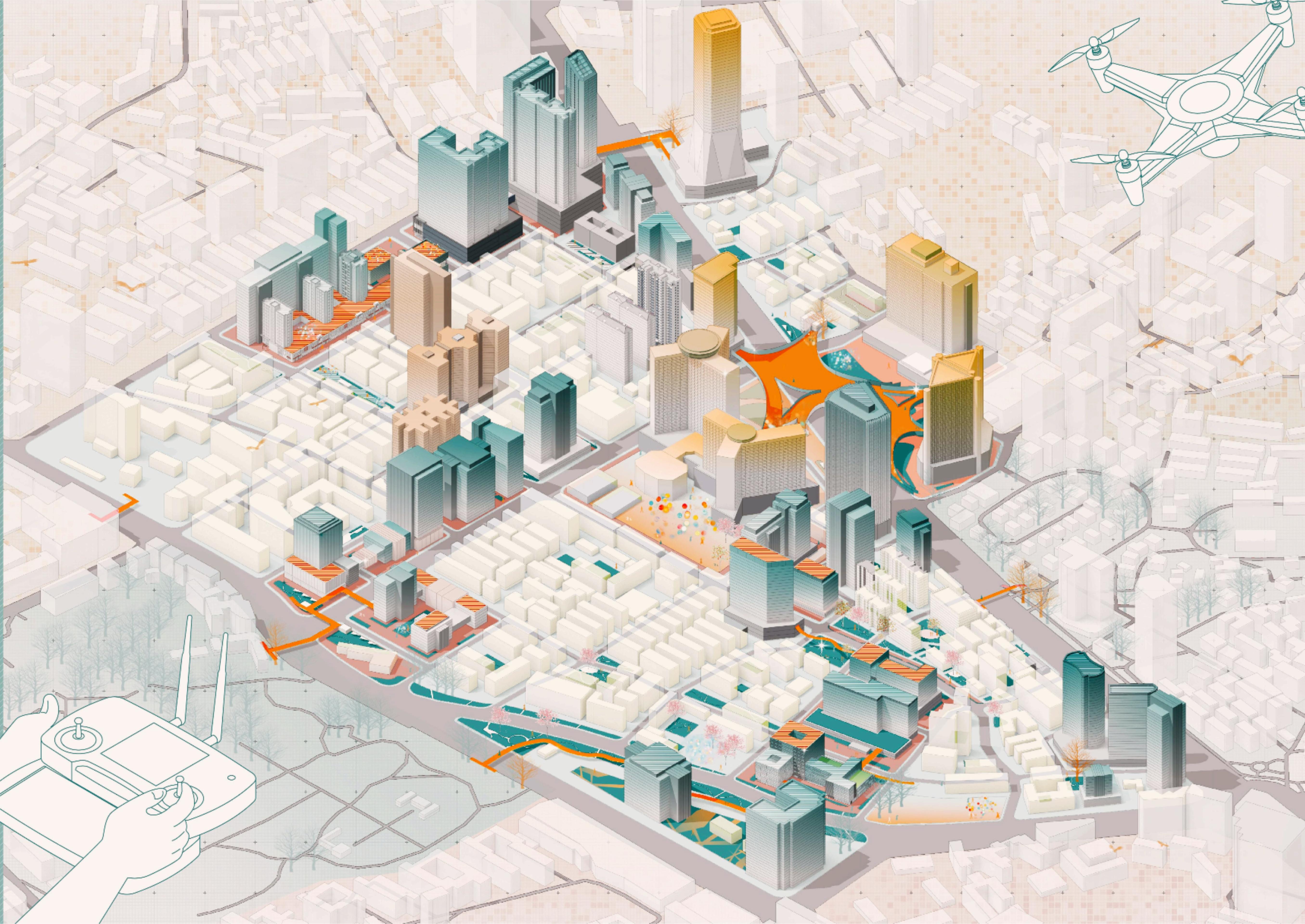
Pedestrian-friendly street upgrades and improved circulation systems strengthen connections between key urban nodes. Integrated transit access and parking solutions reduce surface congestion while enhancing walkability.
Vertical & Underground Activation
Rooftop spaces are reclaimed as accessible public terraces, while underground levels accommodate multi-functional programs such as commercial spaces, leisure facilities, and transit infrastructure.
Public Realm Enhancement
Cultural and recreational zones are distributed throughout the site to support diverse user groups and activities, contributing to a more inclusive urban environment.
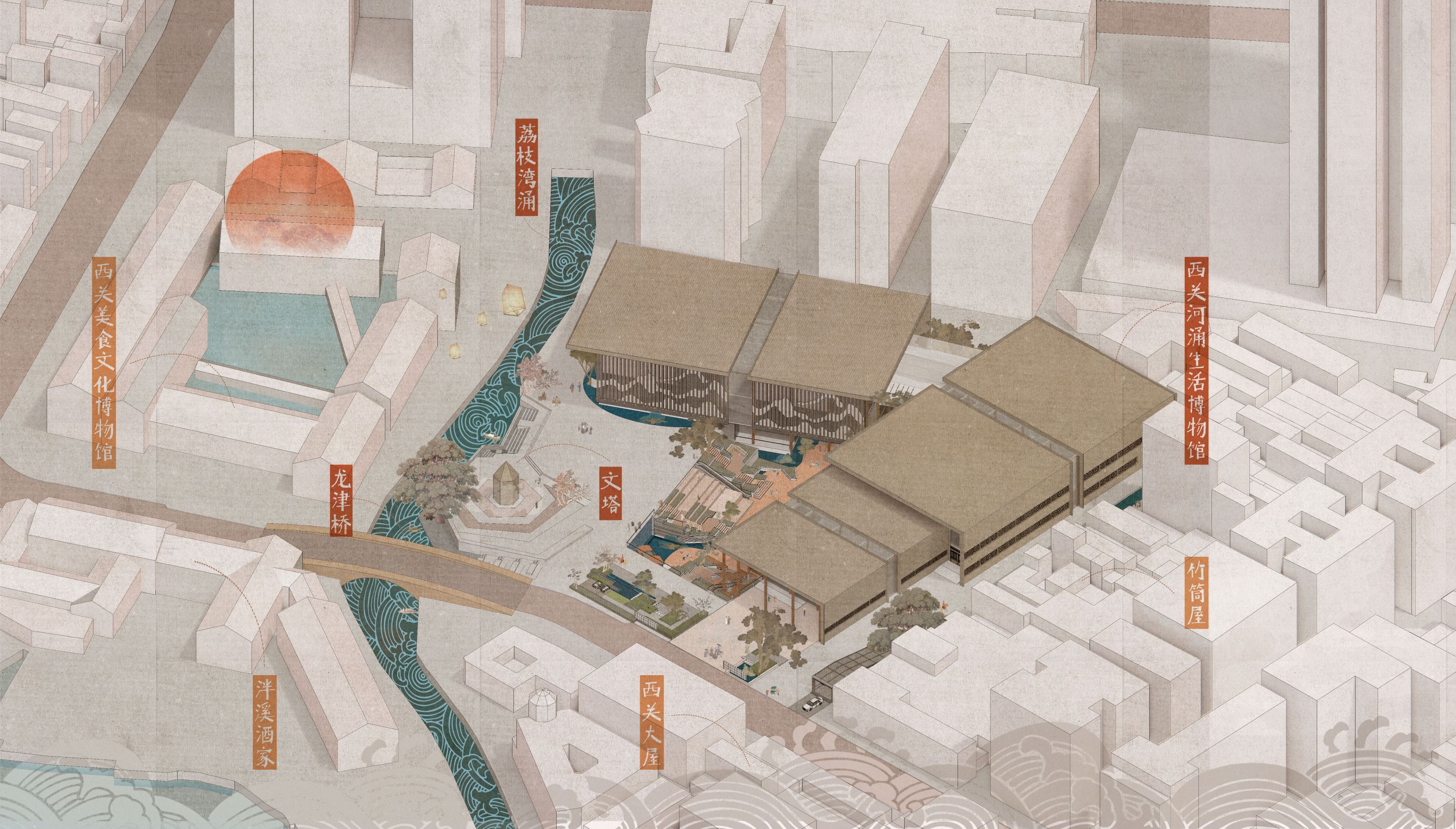
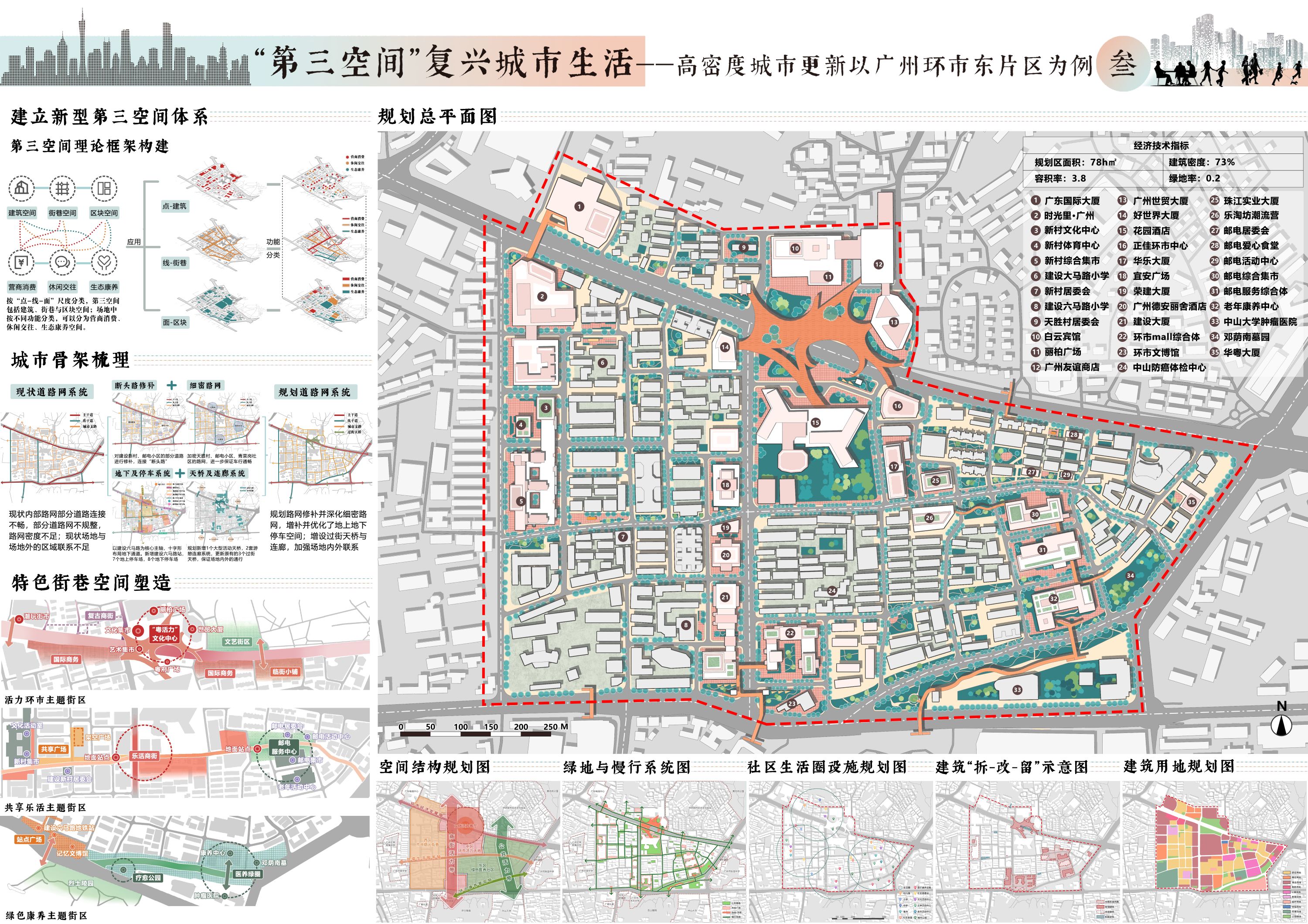
The master plan synthesizes spatial structure, green networks, transportation systems, and land-use strategies into a coherent urban framework.
By balancing redevelopment with preservation, the proposal maintains the district’s historical character while introducing contemporary architectural and spatial language. The phased strategy allows for incremental implementation, supporting long-term sustainability.
The project presents:
- A comprehensive urban renewal master plan
- A third-space-based spatial framework for high-density contexts
- Strategies that integrate social, cultural, and infrastructural considerations
Huanshi East City Renewal Design demonstrates how architectural and urban design can mediate between historical continuity and modern urban demands.
This project reinforced the importance of strategic thinking in large-scale urban design.
Working across multiple scales—from block-level interventions to district-wide planning—highlighted how spatial systems must operate cohesively to support daily urban life. The experience established a strong foundation for my later work in urban interaction and system-oriented design.