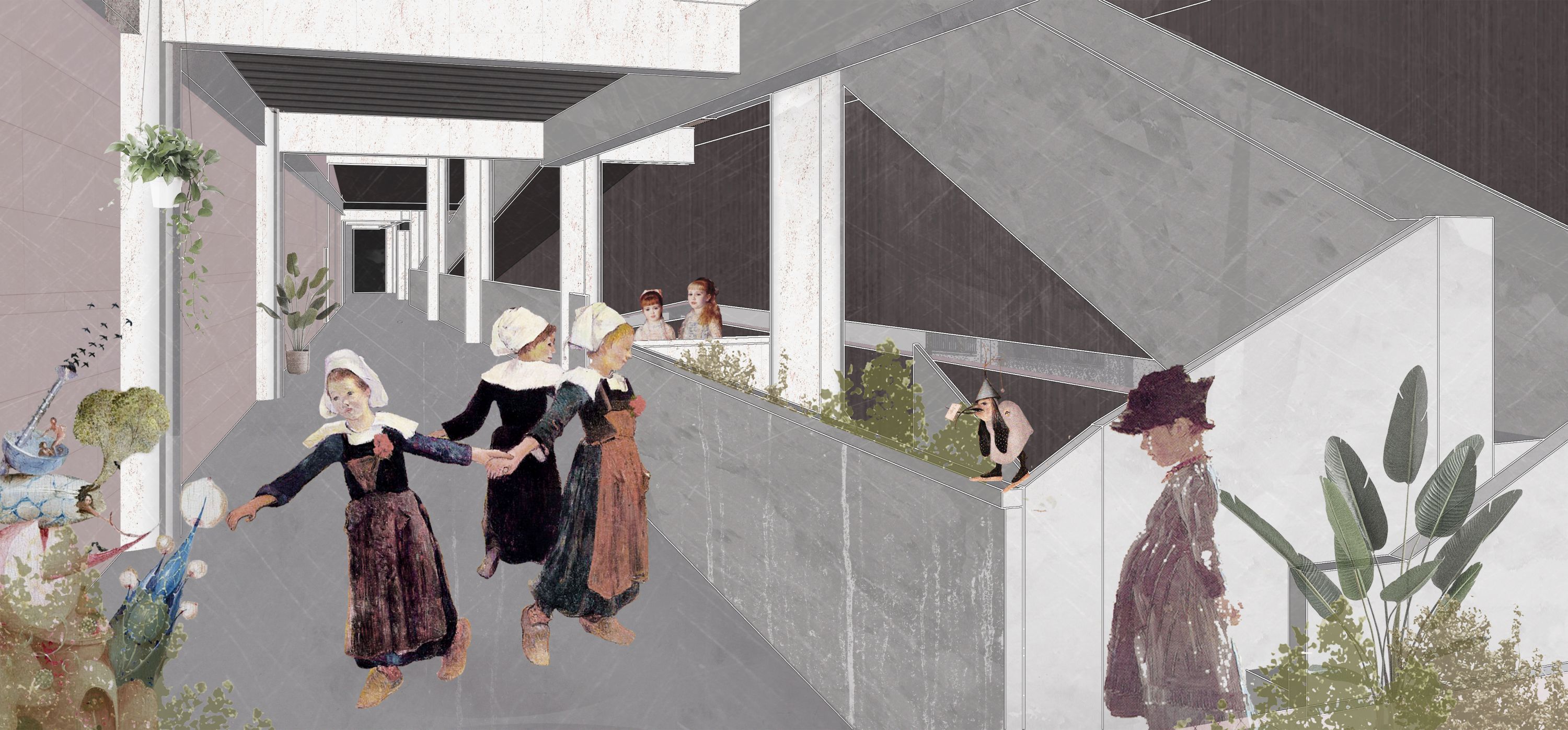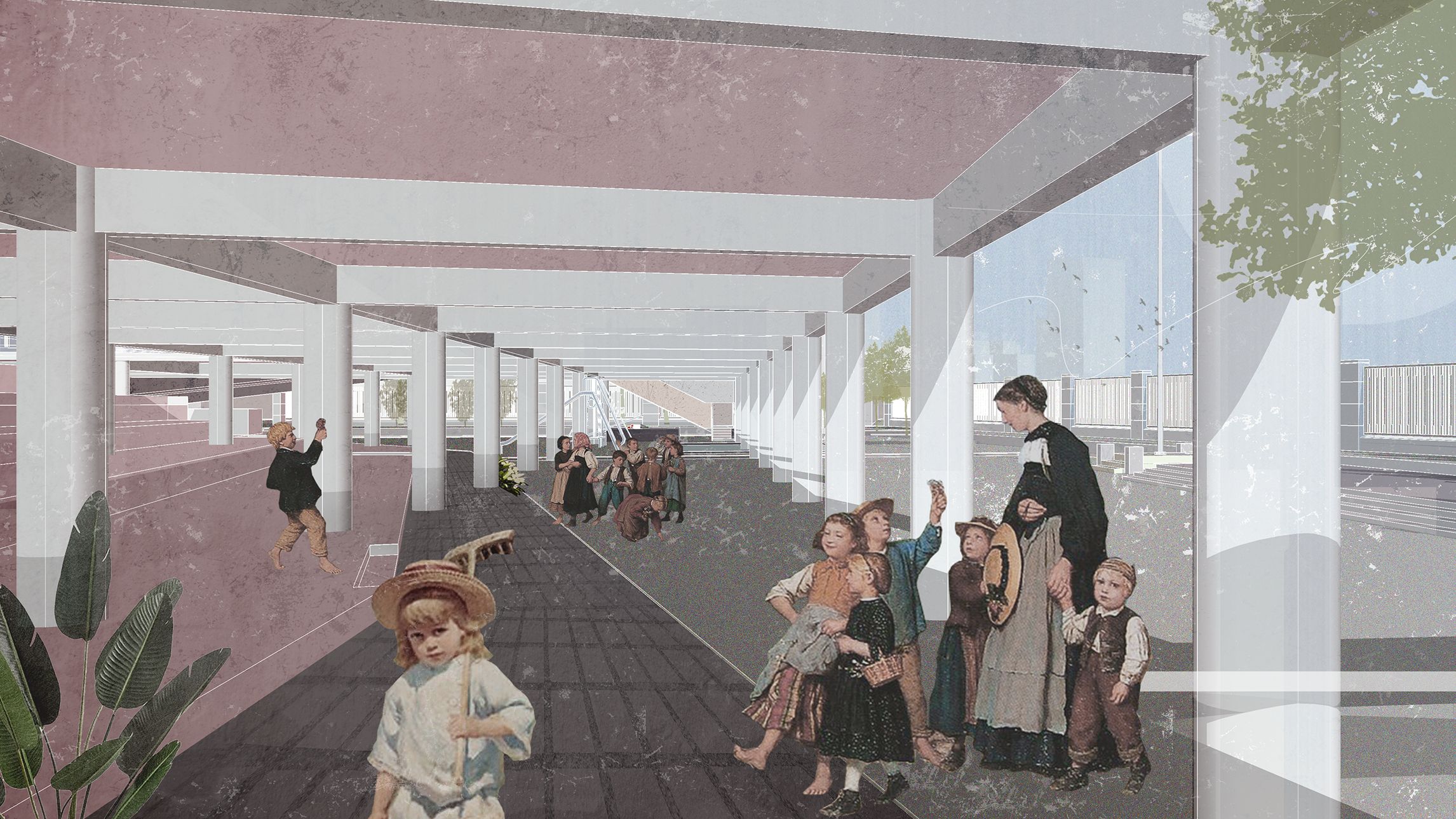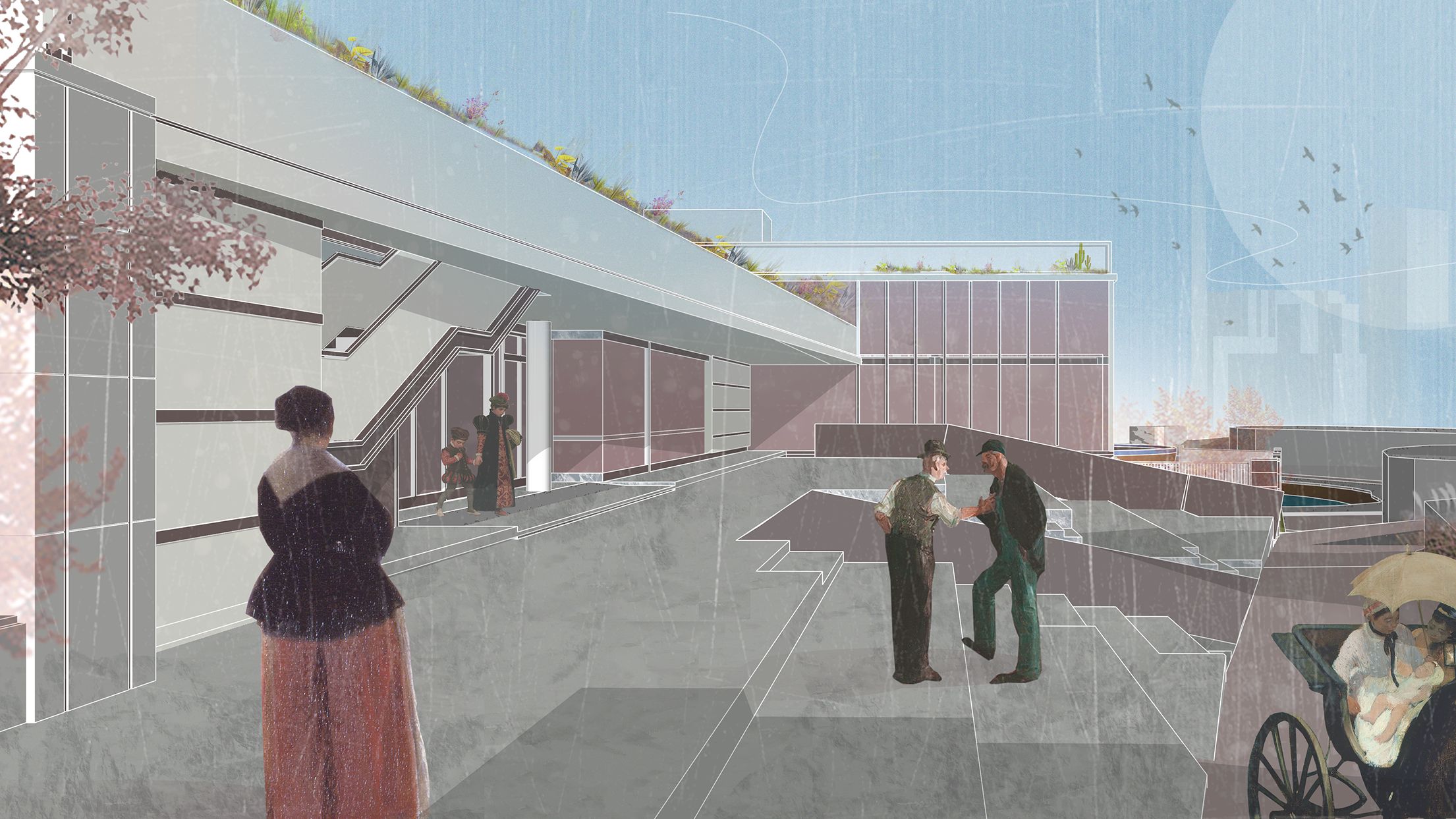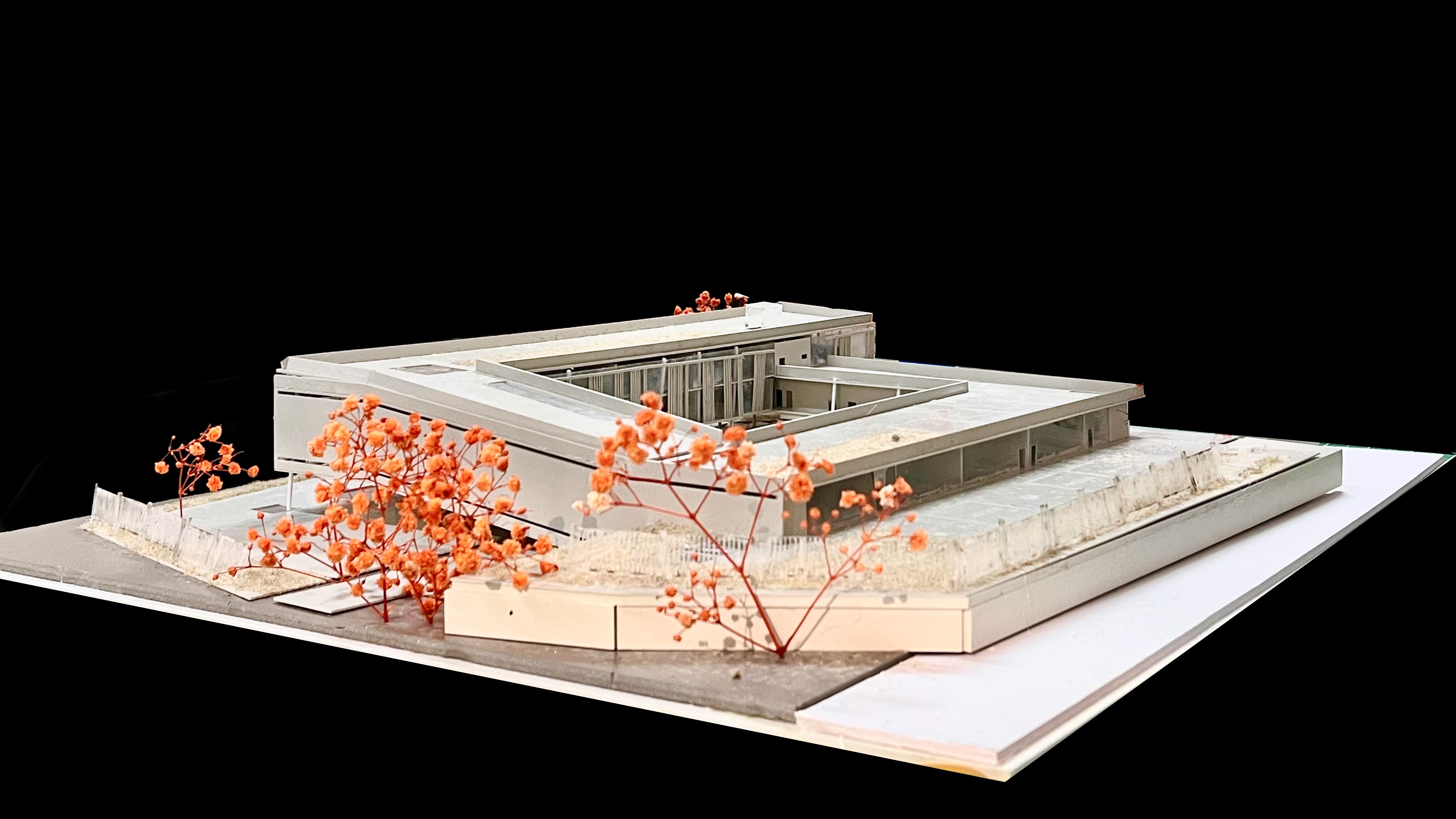
Kindergarten Design is an architectural project that explores how spatial flexibility and environmental qualities can support children’s physical and cognitive development.
The design emphasizes openness, adaptability, and sensory engagement, creating a learning environment that encourages exploration, interaction, and curiosity.
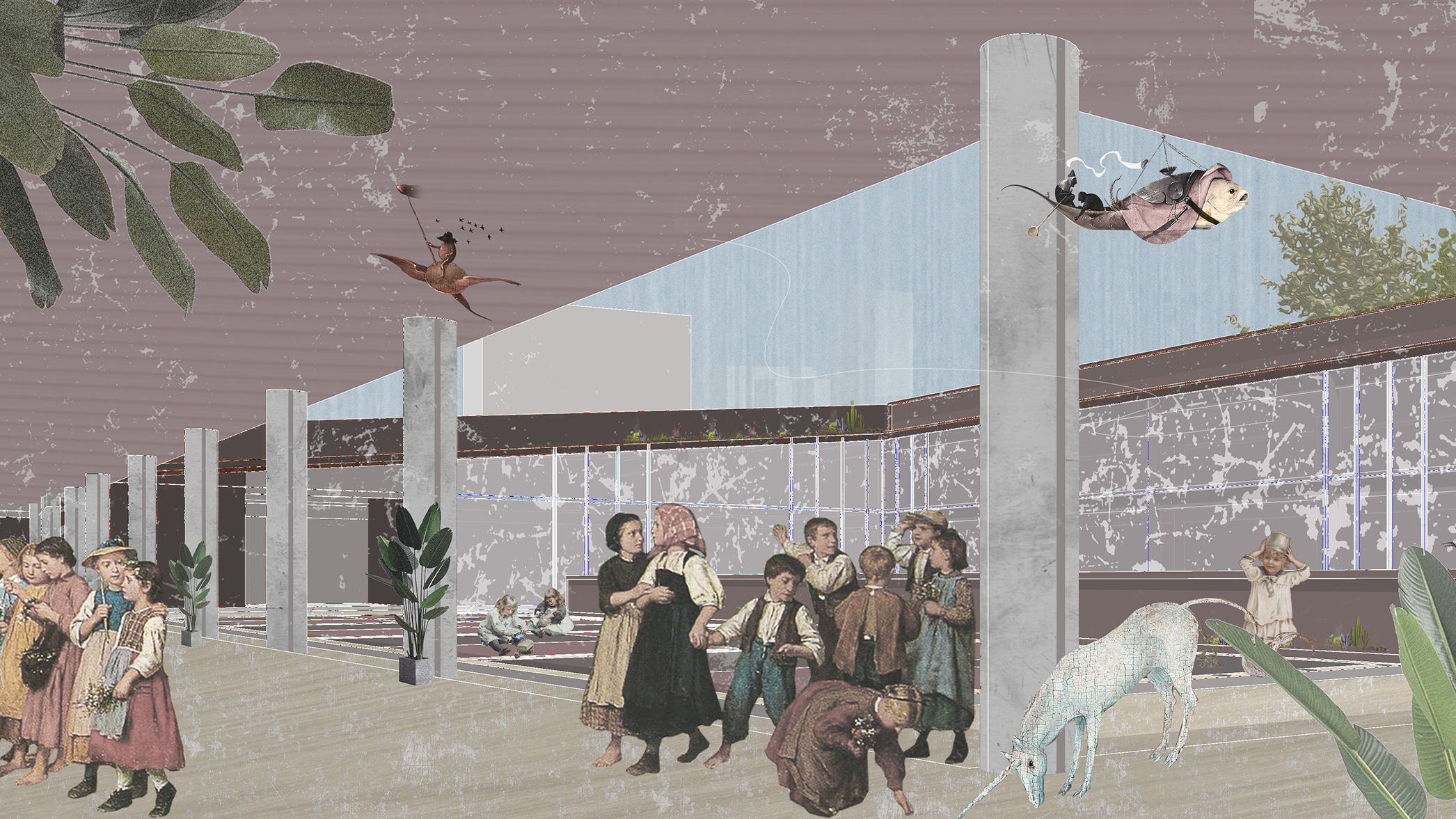
Children experience space through movement, touch, light, and sound. Rather than organizing the kindergarten around rigid functional divisions, this project adopts an open layout strategy that allows activities to evolve throughout the day.
Minimal partitions and barrier-free indoor spaces support free circulation, enabling children to explore their environment intuitively and safely.
The architectural layout prioritizes flexibility and visual continuity.
Key strategies include:
- Open-plan learning and activity areas
- Seamless transitions between indoor and outdoor spaces
- Clear sightlines to enhance supervision while maintaining openness
These elements allow spaces to accommodate multiple activities and adapt to changing educational needs.
Natural light plays a central role in shaping the spatial experience. Large openings and courtyards introduce daylight and connect interior spaces with outdoor landscapes.
Seasonal changes become part of the learning environment, allowing children to develop awareness of time, weather, and nature. Material choices and spatial proportions are carefully considered to create a warm, engaging atmosphere that stimulates curiosity and imagination.
The project proposes a kindergarten environment that is:
- Open and adaptable
- Sensory-rich without being overwhelming
- Supportive of both structured learning and free play
By emphasizing spatial quality over strict functional zoning, the design highlights the role of architecture in shaping early childhood development.
This project marked an early exploration of how architectural space influences human behavior.
Designing for children reinforced the importance of flexibility, perception, and embodied experience—principles that continue to inform my later work in interaction design and urban-scale projects.