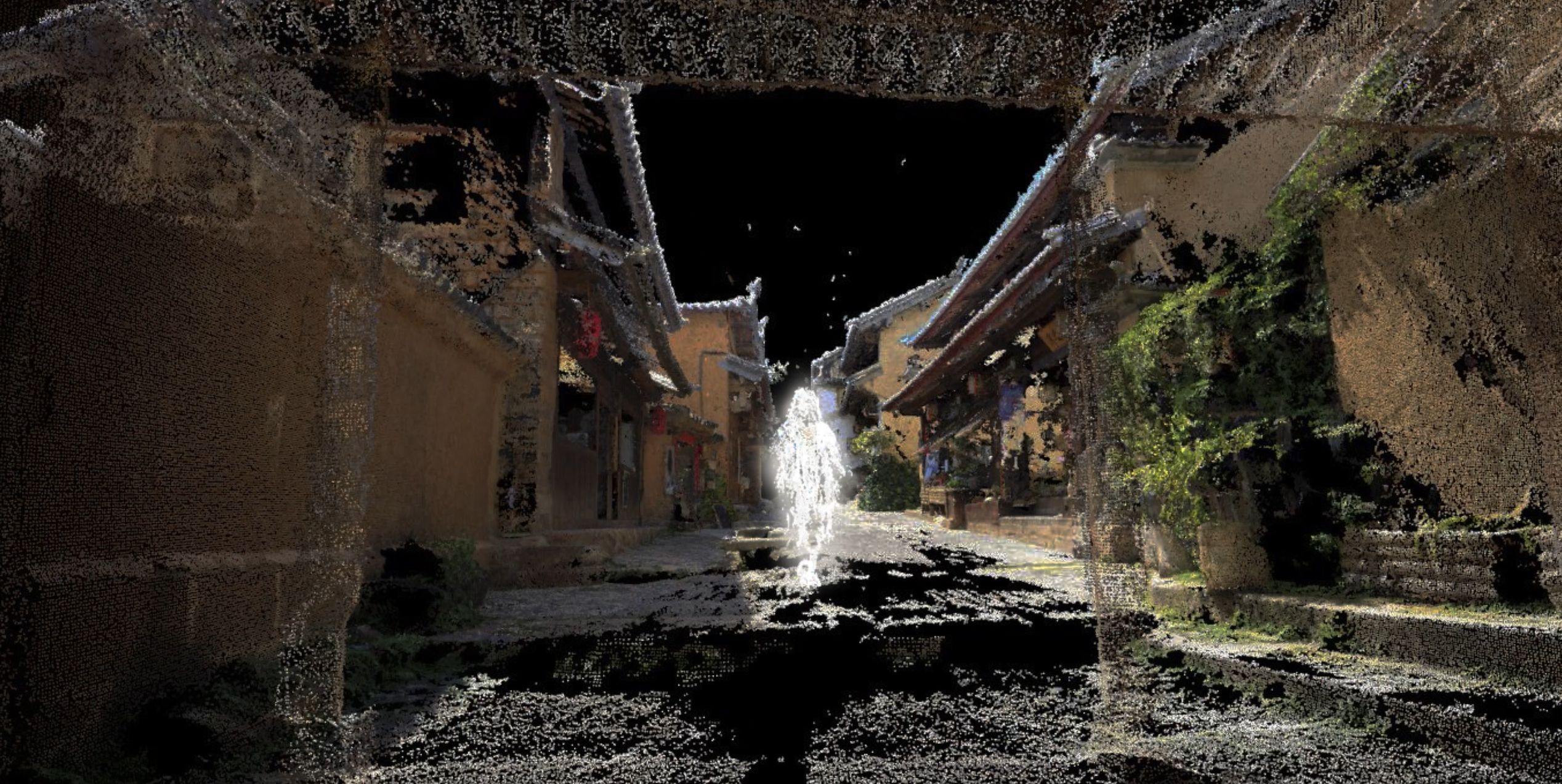
Ironic Shaxi is a stop-motion animation project that critically reimagines the past and future of Sideng Street in Shaxi, China.
Rather than documenting urban change through conventional architectural representation, the project uses animation and mixed media to explore the tension between heritage preservation and capital-driven development. The work positions animation as a speculative spatial narrative tool, capable of revealing contradictions embedded in contemporary urban transformation.
Sideng Street is a historically significant trading street whose identity has been reshaped by tourism and commercialization. While preservation efforts often focus on visual authenticity, they frequently obscure deeper social and spatial transformations.
This project asks:
What is preserved, and what is transformed, when historic urban spaces are repackaged for consumption?
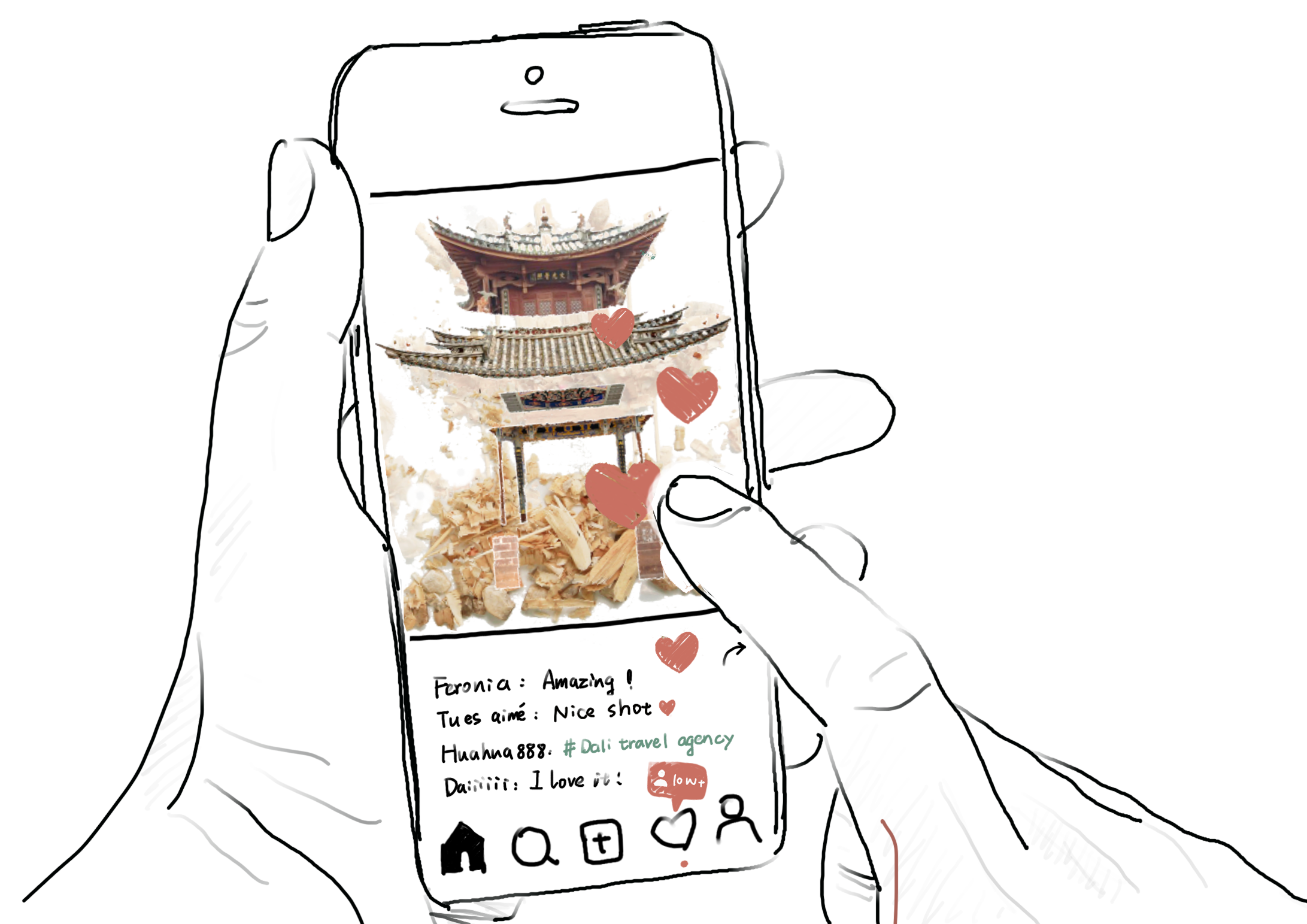
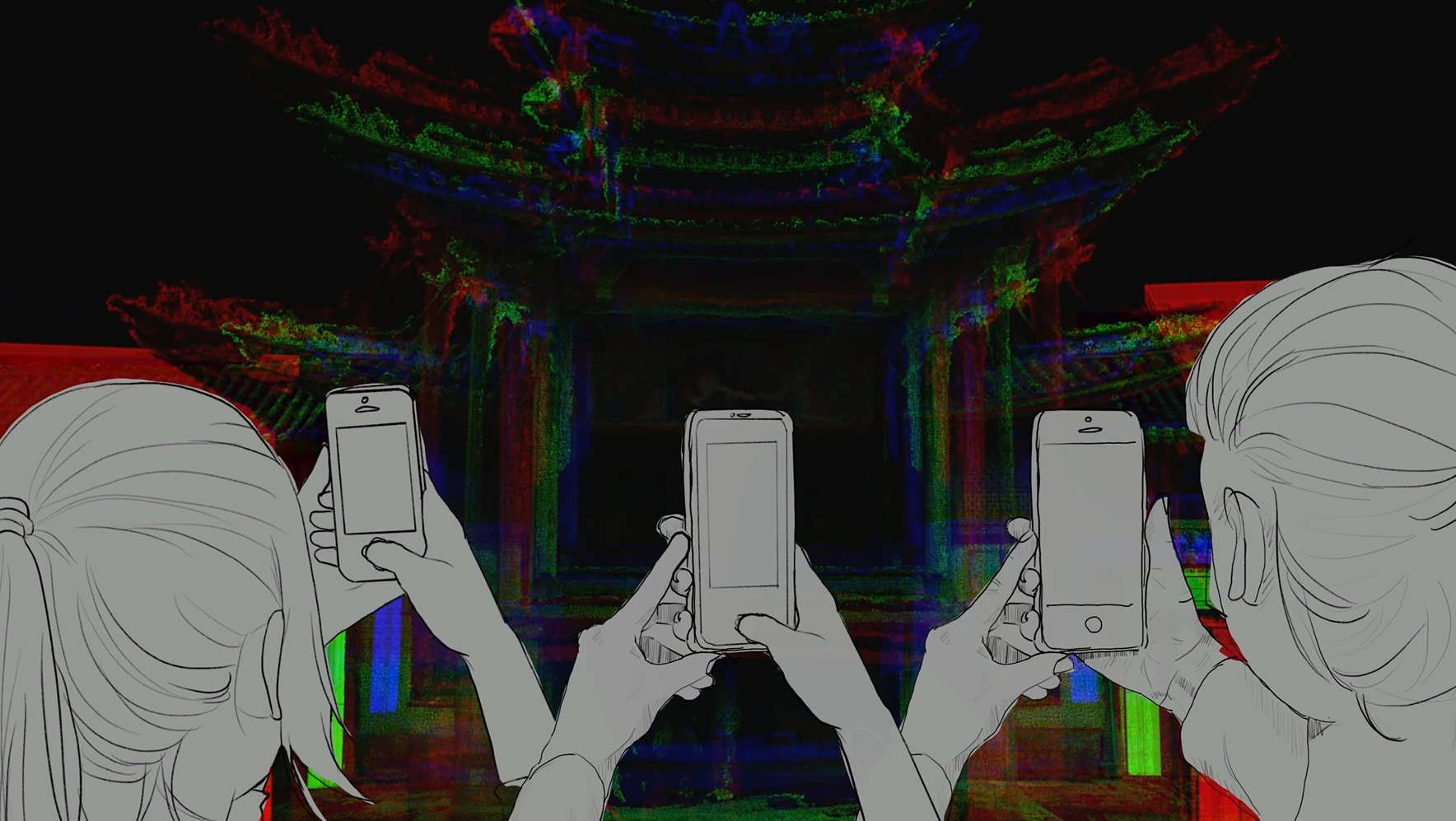
By juxtaposing traditional imagery with commercialized representations, the project exposes the irony embedded in contemporary heritage narratives.
The animation combines multiple representational layers:
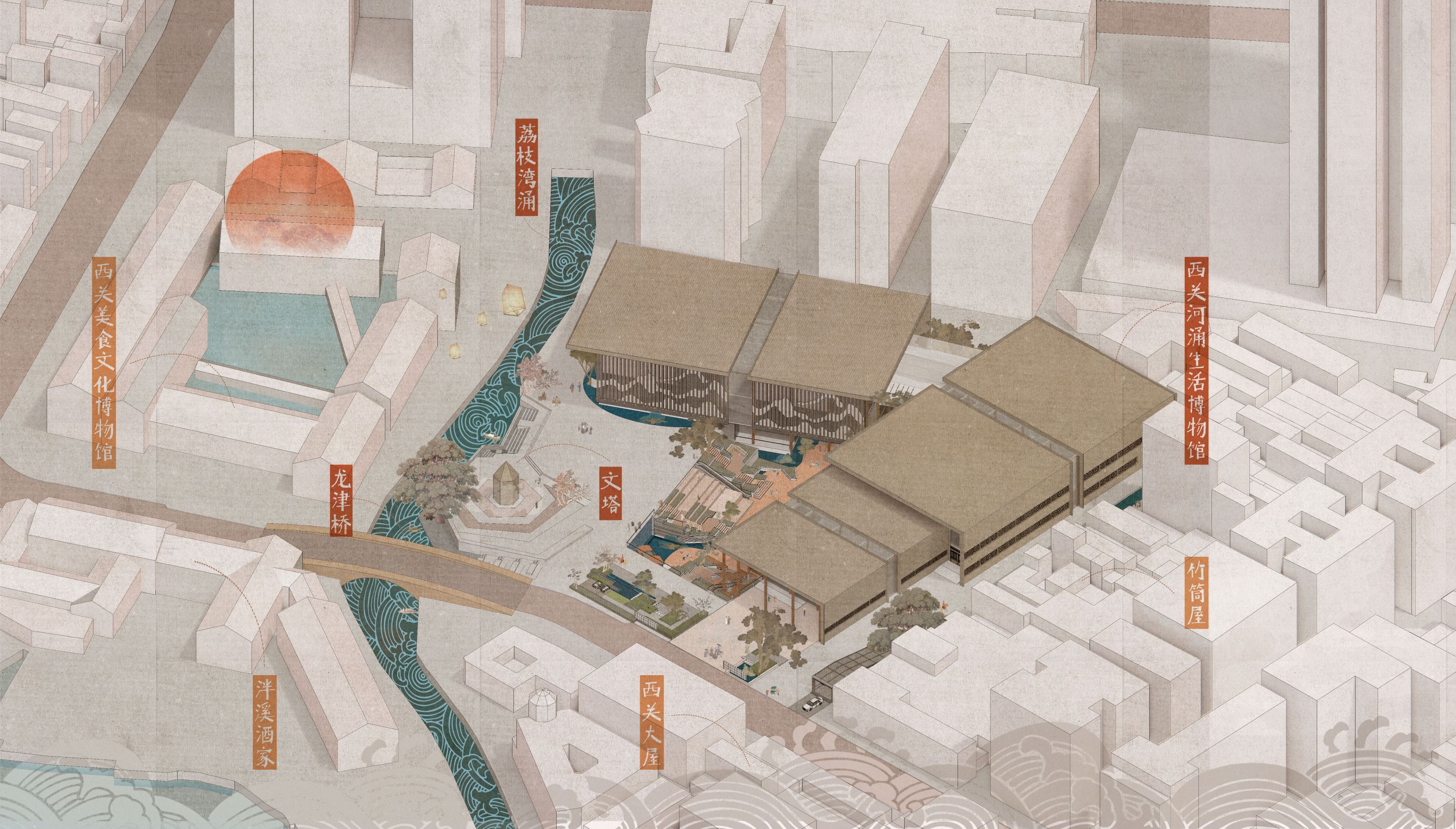
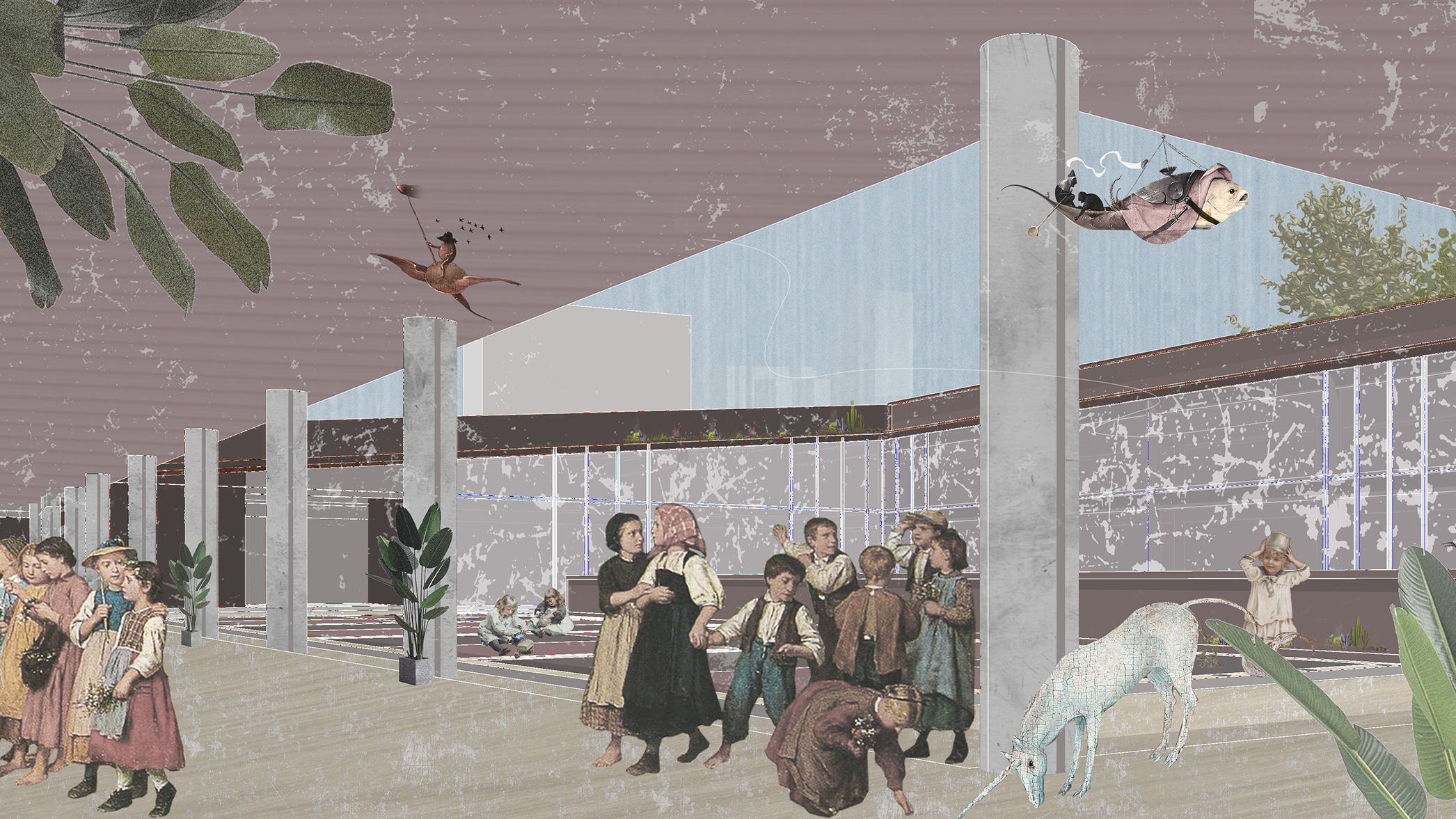
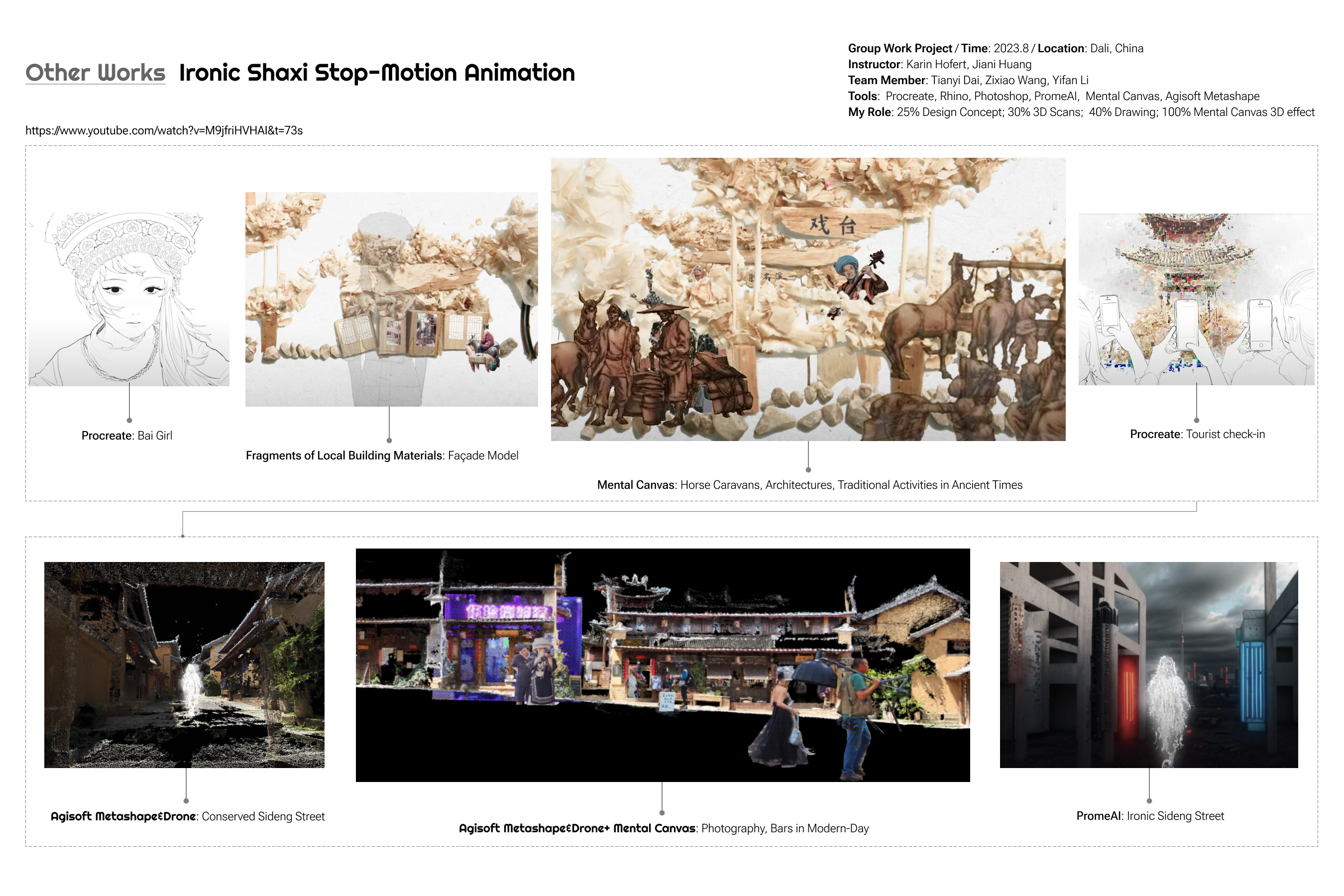
- Hand-drawn illustrations depicting historical figures and daily activities
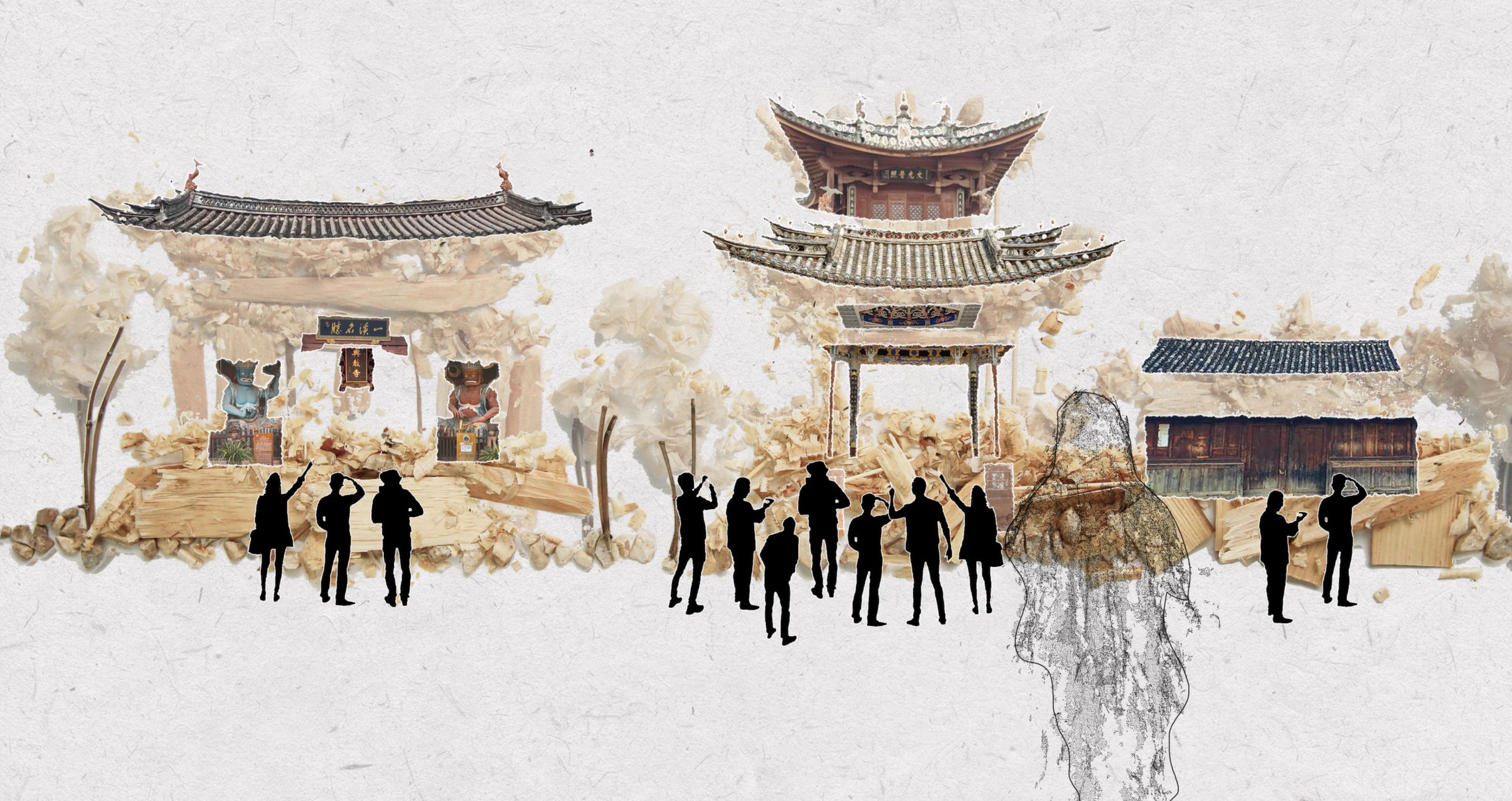
- Physical materials, including wood shavings collected from local timber-framed buildings
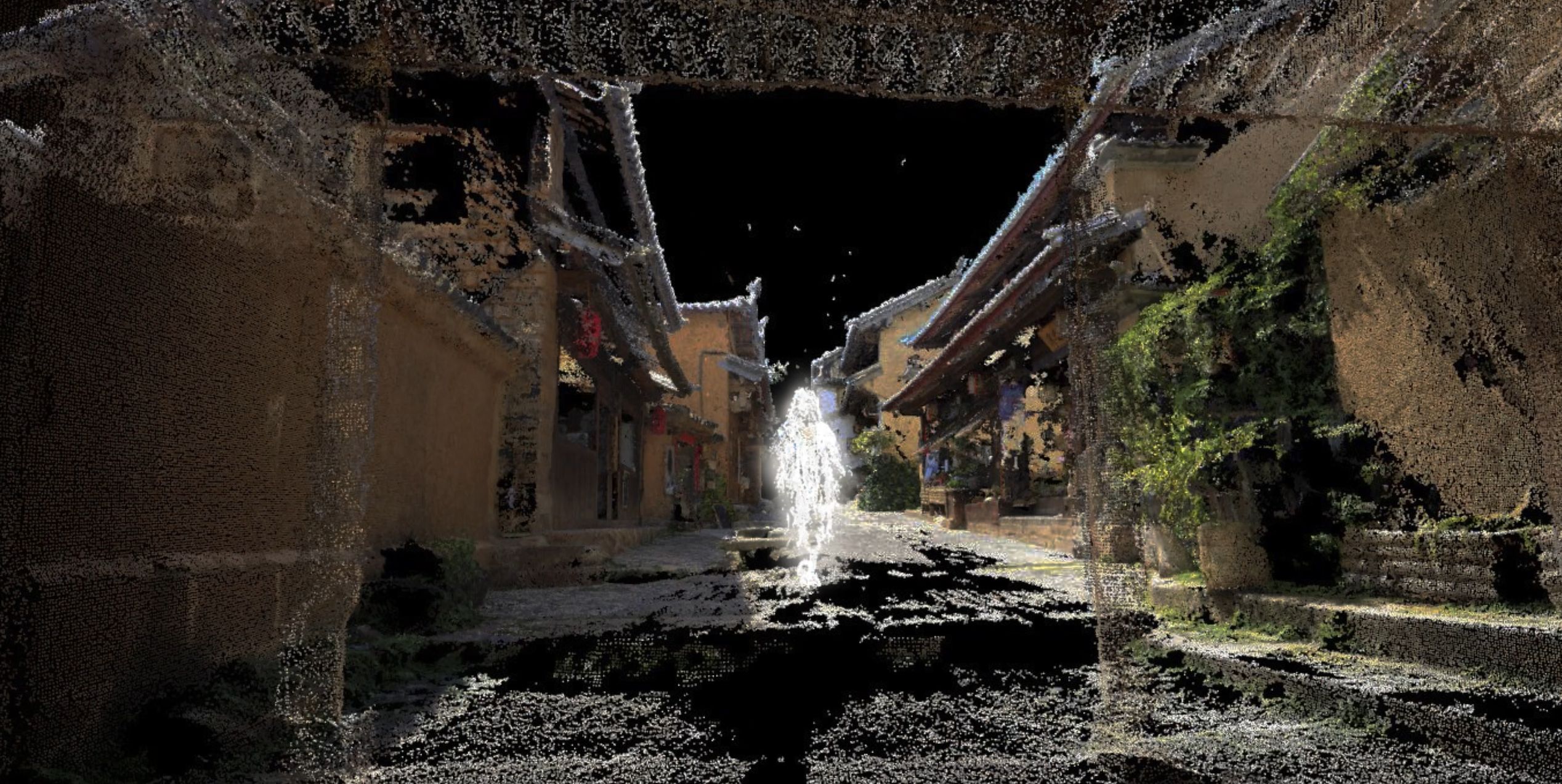
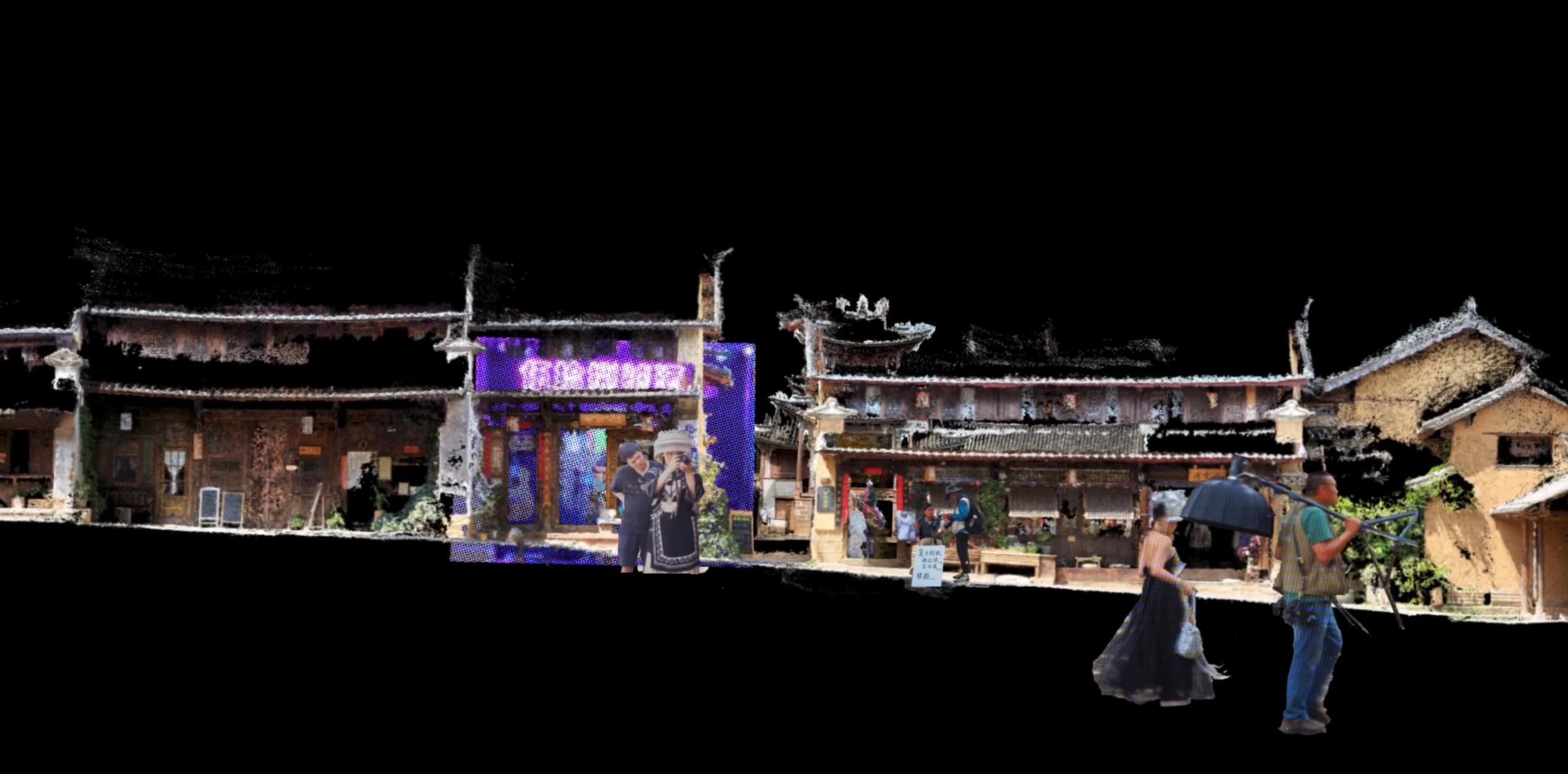
- 3D scans of Sideng Street, generated using drone and camera data in Agisoft Metashape
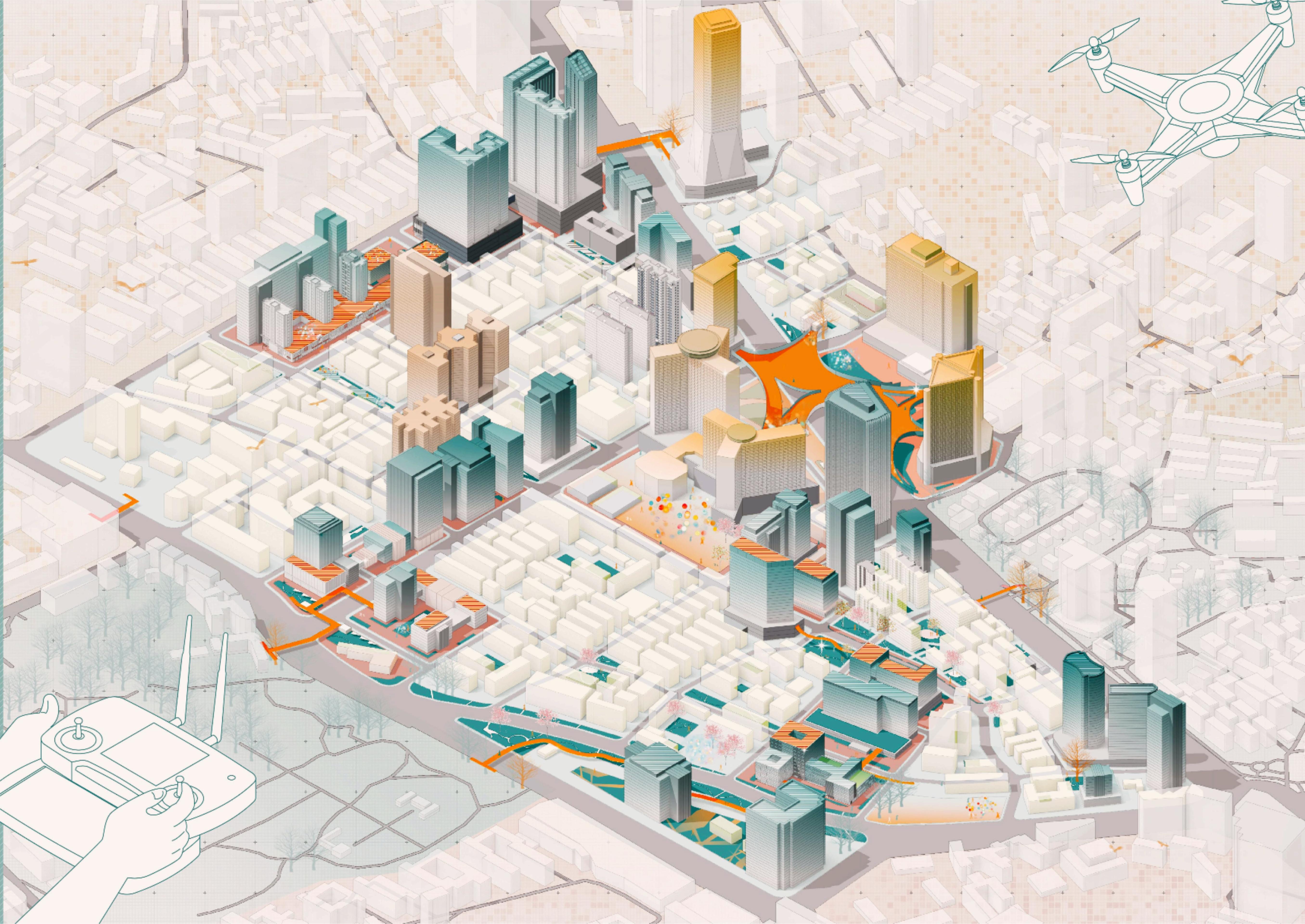
- AI-generated imagery created with PromeAI to represent speculative, commercial futures
These elements are assembled through stop-motion and Mental Canvas to create a layered, temporal narrative that collapses past, present, and imagined futures.
Rather than aiming for visual realism, the project emphasizes fragmentation and collage.
Mental Canvas enables spatial storytelling that departs from linear cinematic framing, allowing viewers to navigate between scenes as layered spatial memories. Procreate and Rhino were used to integrate drawn, scanned, and generated content into cohesive scenes.
This hybrid workflow reflects the unstable identity of the site itself.
The final output is a short stop-motion animation that:
- Visualizes urban transformation as a contested process
- Questions the authenticity of heritage preservation under tourism economies
- Demonstrates animation as a critical spatial medium rather than a representational tool
The project reframes urban heritage not as a static artifact, but as an evolving and often contradictory system.
This project expanded my understanding of spatial design beyond physical construction.
Working across drawing, scanning, AI imagery, and animation highlighted how representation itself shapes urban narratives. The experience reinforced the importance of speculative and critical media in examining the social consequences of design decisions.
Future work could extend this approach into interactive or participatory storytelling formats that allow audiences to navigate urban change more directly.