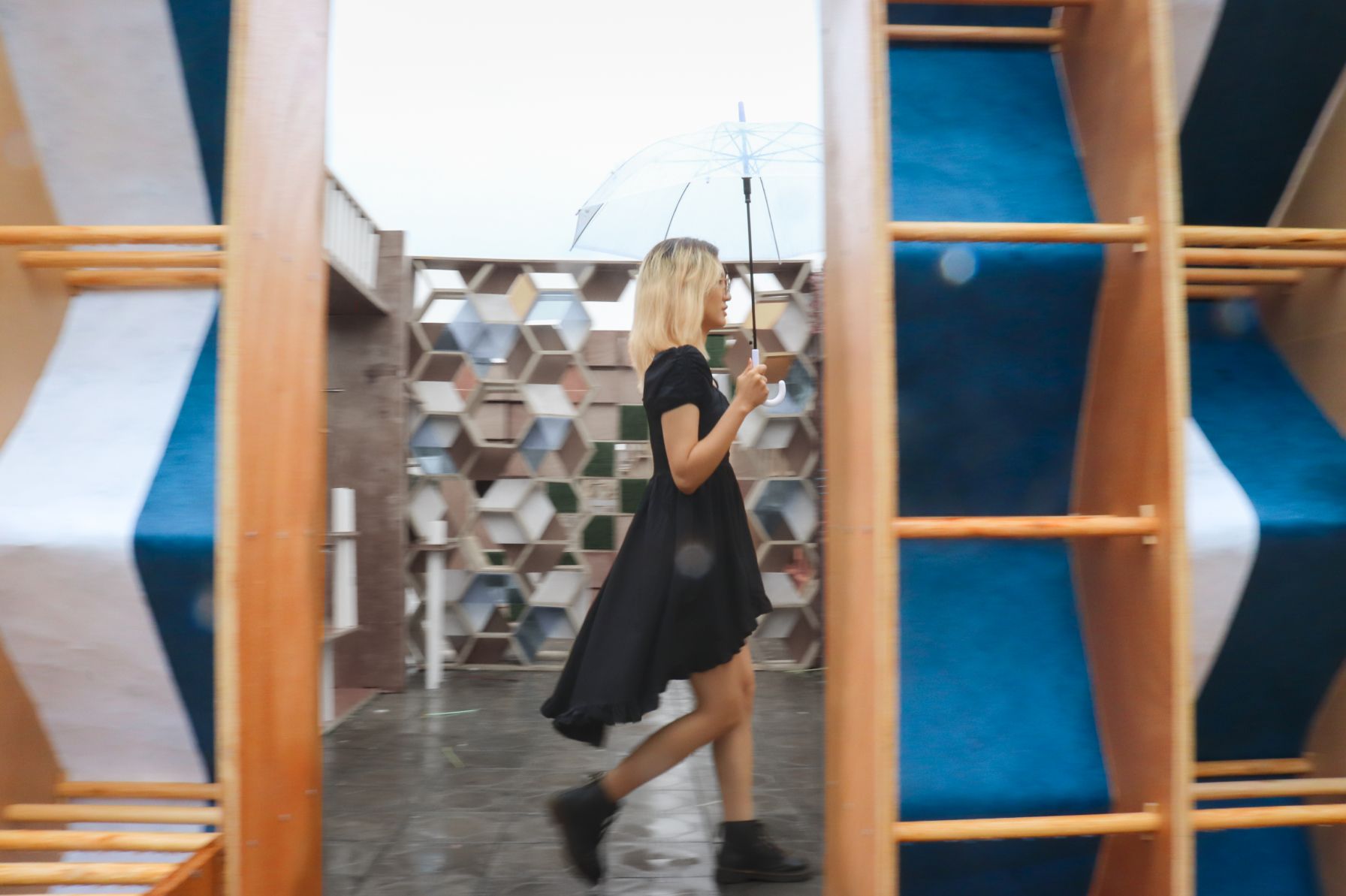
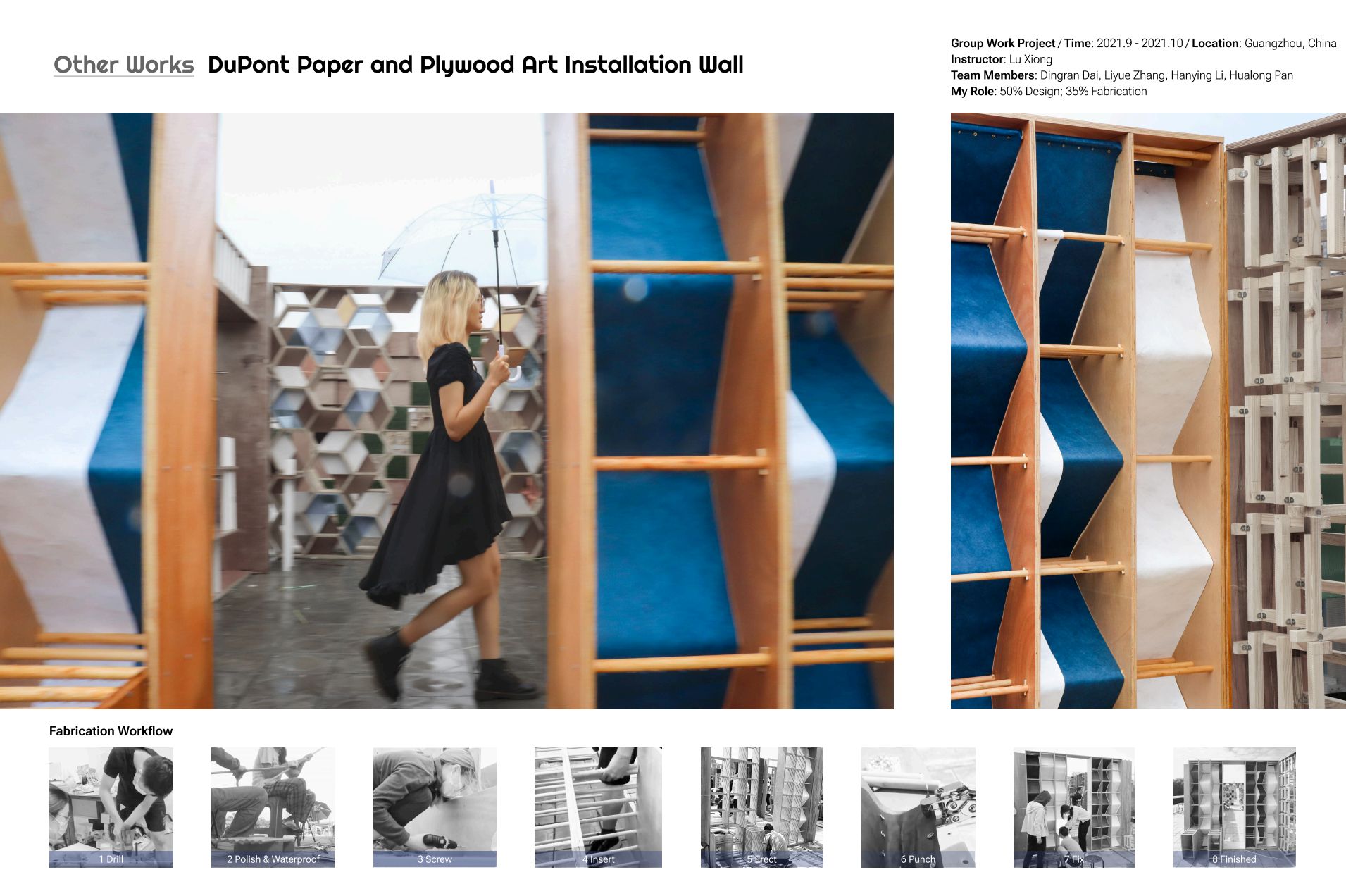
This project is a full-scale art installation that explores how low-cost, lightweight materials can be assembled into a spatial structure that is both functional and visually expressive.
Using DuPont paper and plywood as primary materials, the installation forms a semi-enclosed wall system with integrated seating and a central passageway. The design demonstrates how simple fabrication techniques and material logic can produce a rich spatial experience.
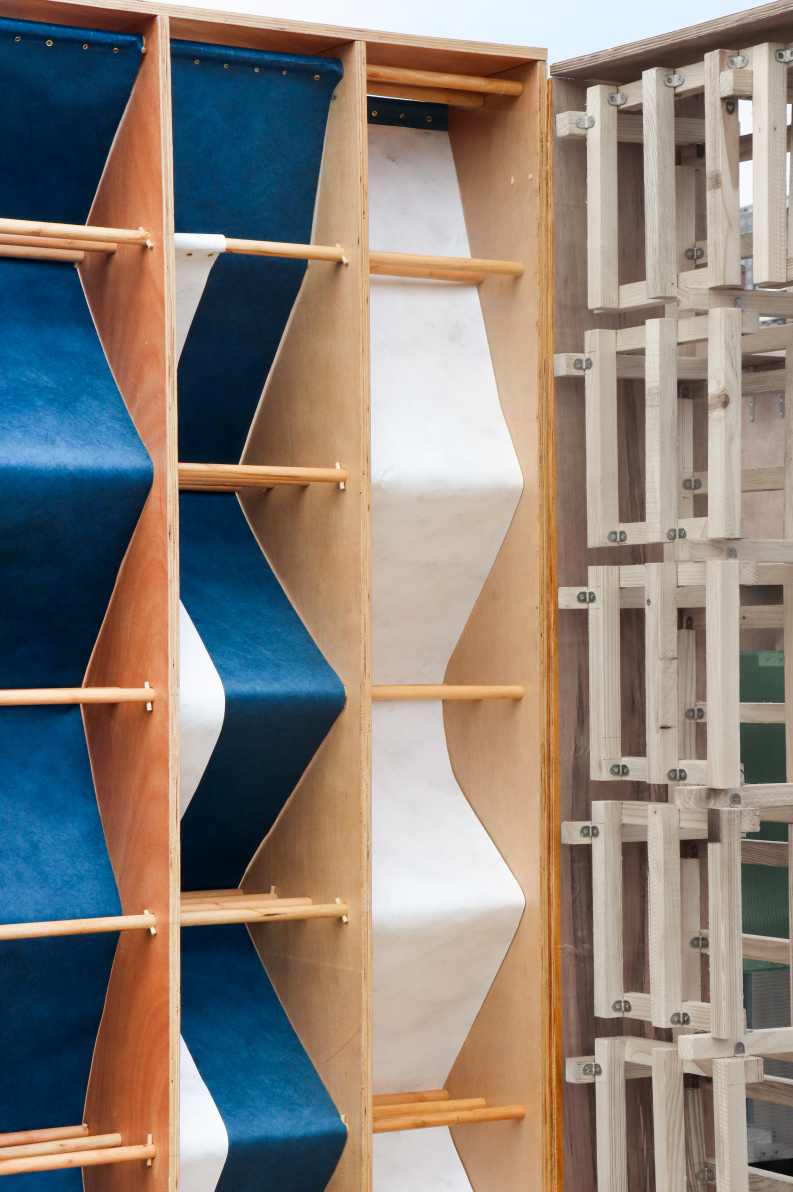
The installation employs two shades of blue and white DuPont paper, chosen for their flexibility, translucency, and durability.
The paper sheets were threaded between brushed and sanded wooden rods and panels, creating a layered, waterfall-like visual effect. This approach allowed the structure to maintain visual depth while remaining lightweight and cost-effective.
Metal rings were used to reinforce perforation points, and fishing lines provided flexible yet reliable binding between components.
The fabrication process focused on simplicity and efficiency.
Key assembly strategies included:
- Repetitive modular units for ease of construction
- Reinforced perforations to prevent material tearing
- Flexible connections that accommodate minor tolerances
These methods allowed the installation to be assembled quickly while maintaining structural stability and visual consistency.
The wall system is designed not only as a visual installation but also as an inhabitable space.
A central opening allows visitors to pass through the structure, while integrated seating elements encourage people to pause, rest, and interact. The installation thus operates as both a boundary and a gathering space.
By combining circulation and occupation, the project transforms a simple wall into an active spatial element.
The completed installation demonstrates:
- How hybrid materials can be combined through straightforward fabrication techniques
- The potential of low-cost materials to create engaging spatial experiences
- A balance between aesthetic expression and functional use
The project highlights the value of material-driven design in creating accessible and interactive public installations.
This project reinforced the importance of material understanding in fabrication-led design.
Working with inexpensive and flexible materials required careful attention to connection details and assembly logic. The experience emphasized how thoughtful material strategies can achieve spatial richness without relying on complex technologies or high production costs.