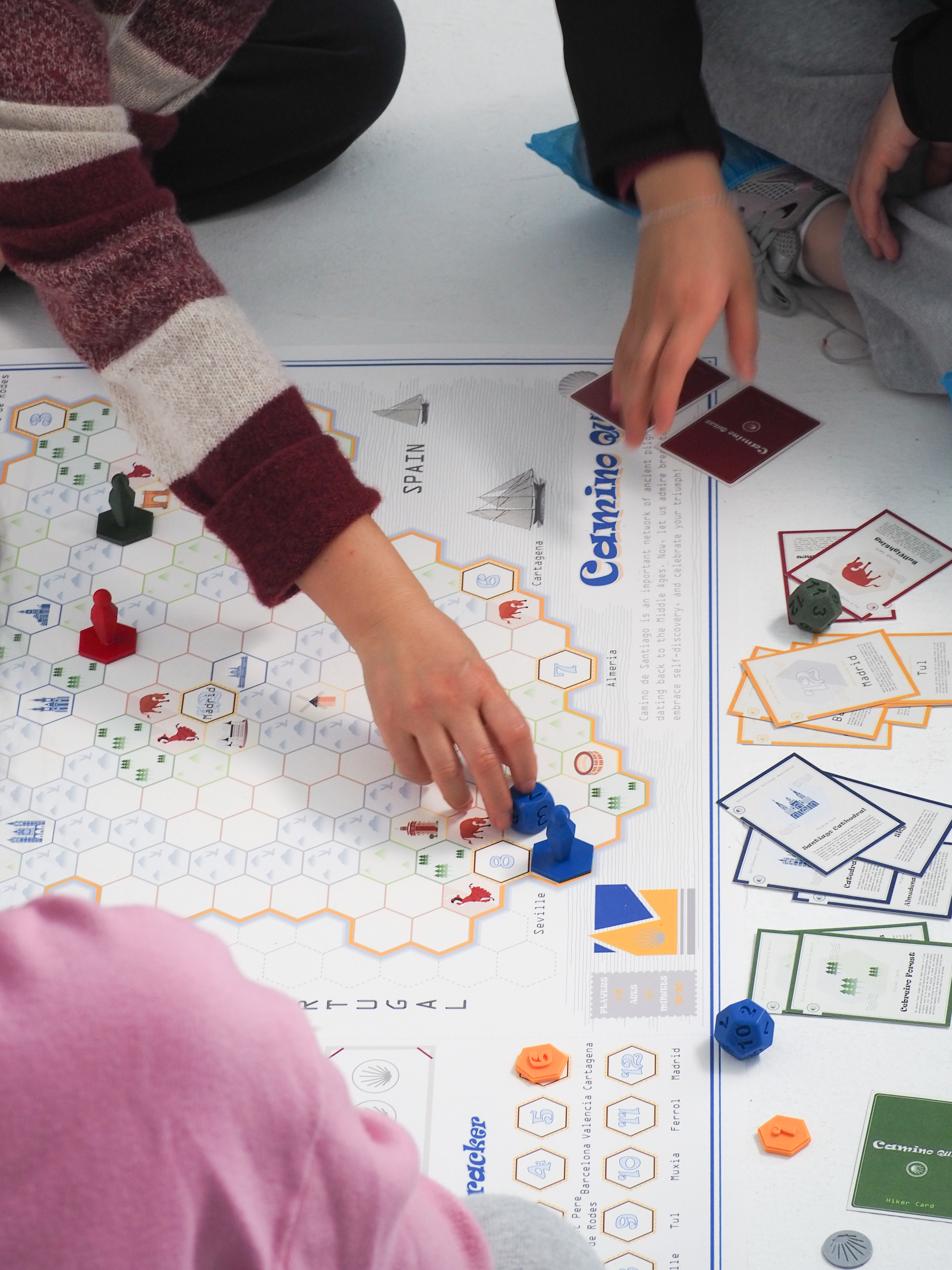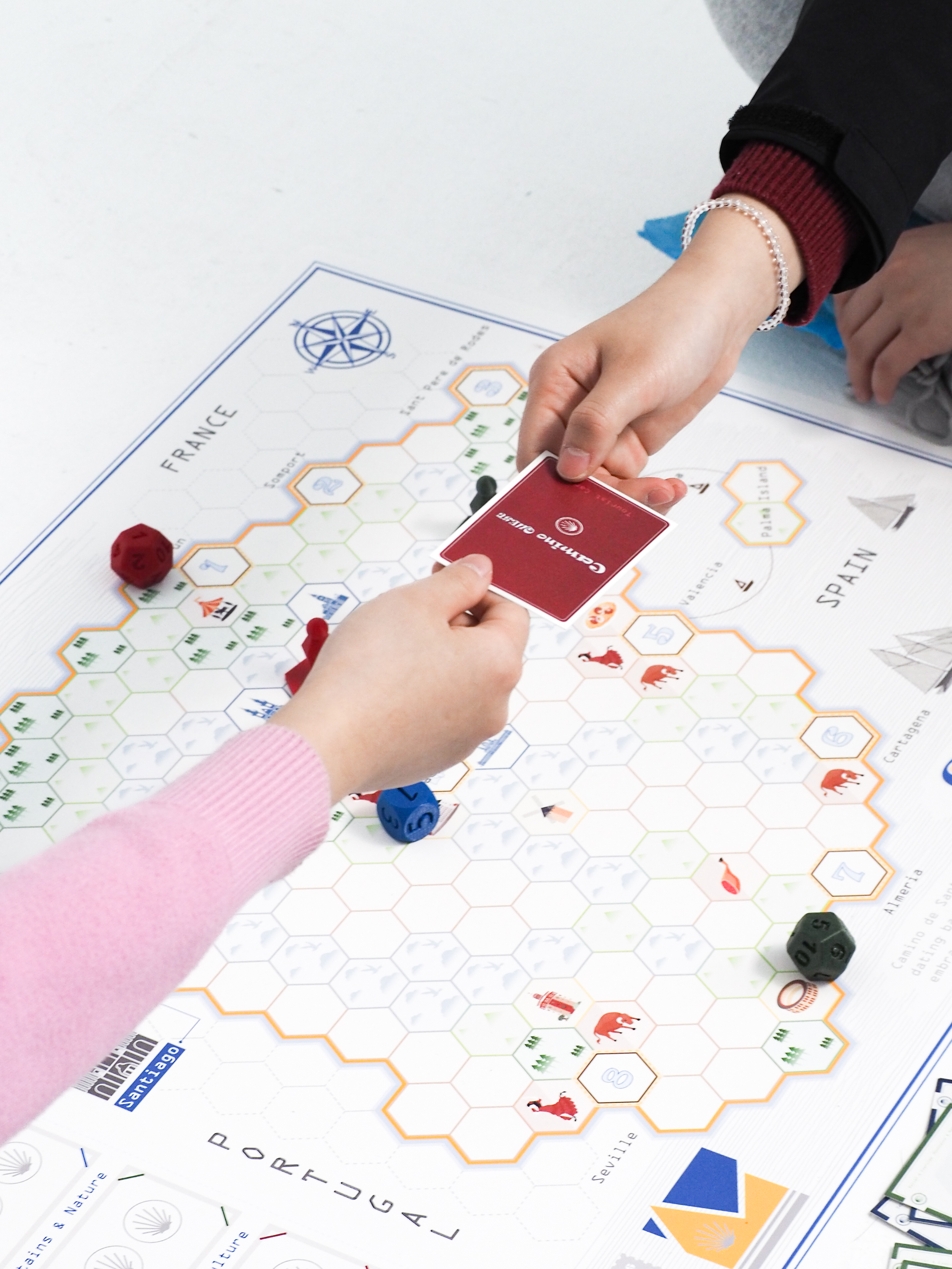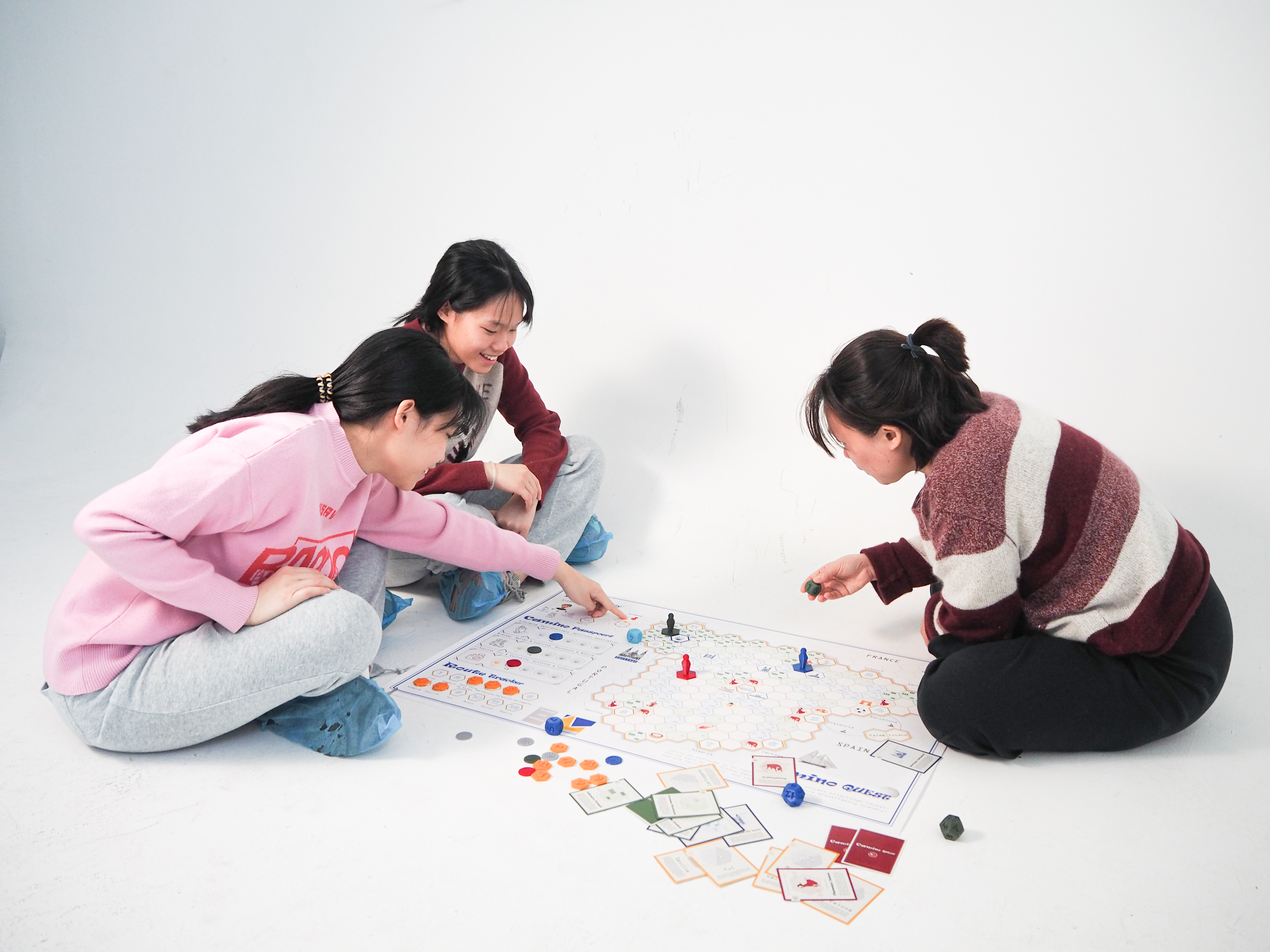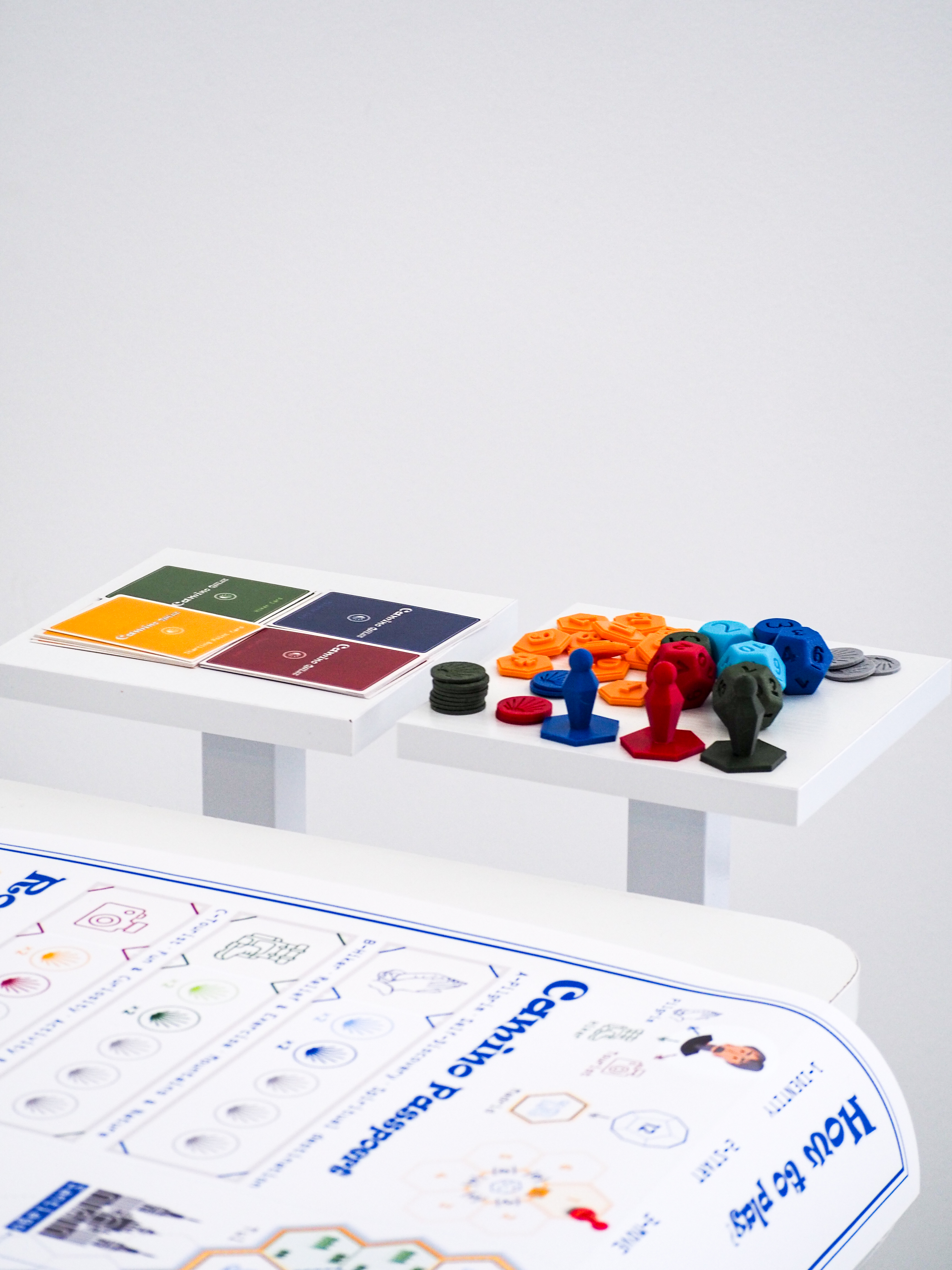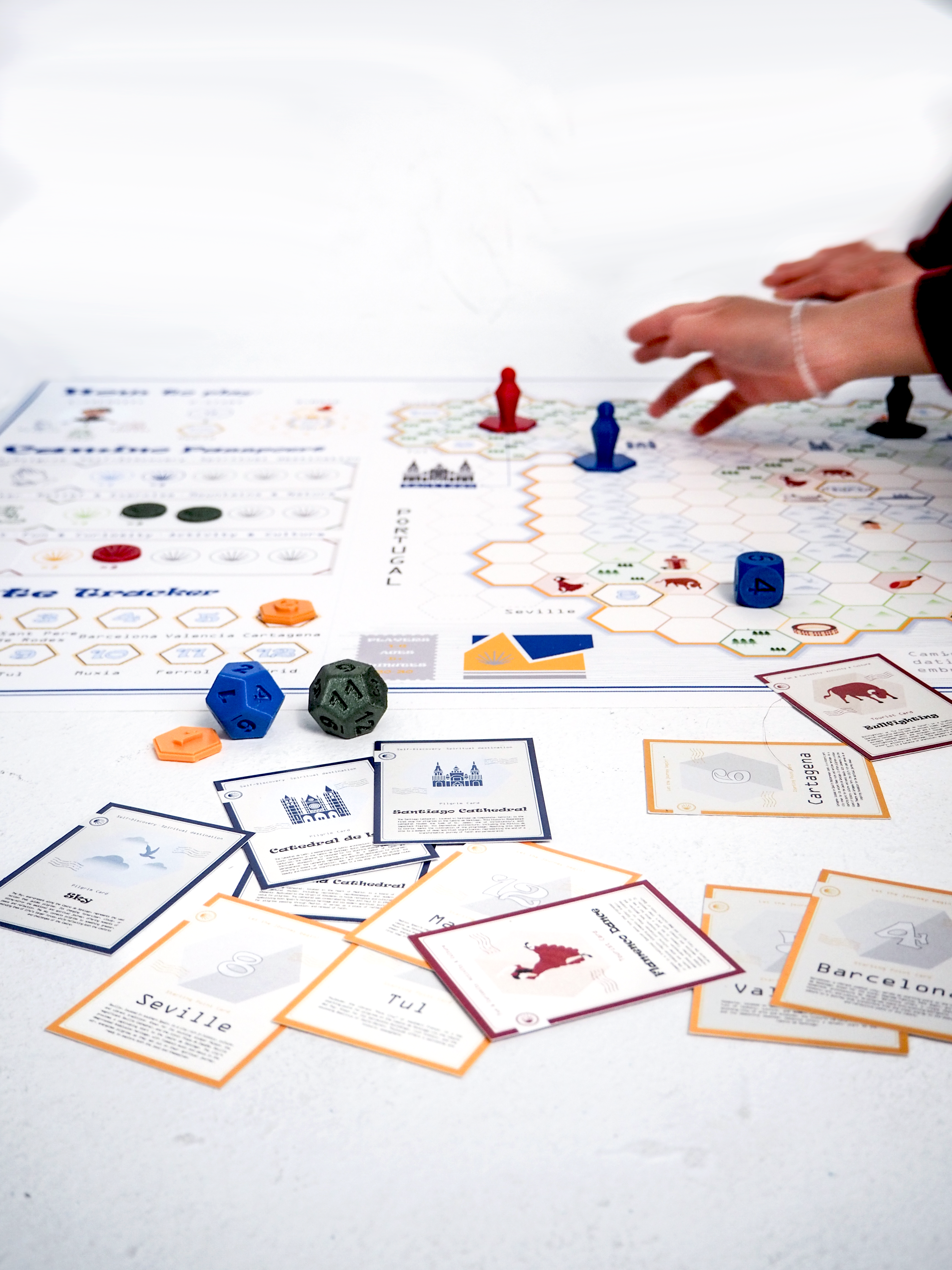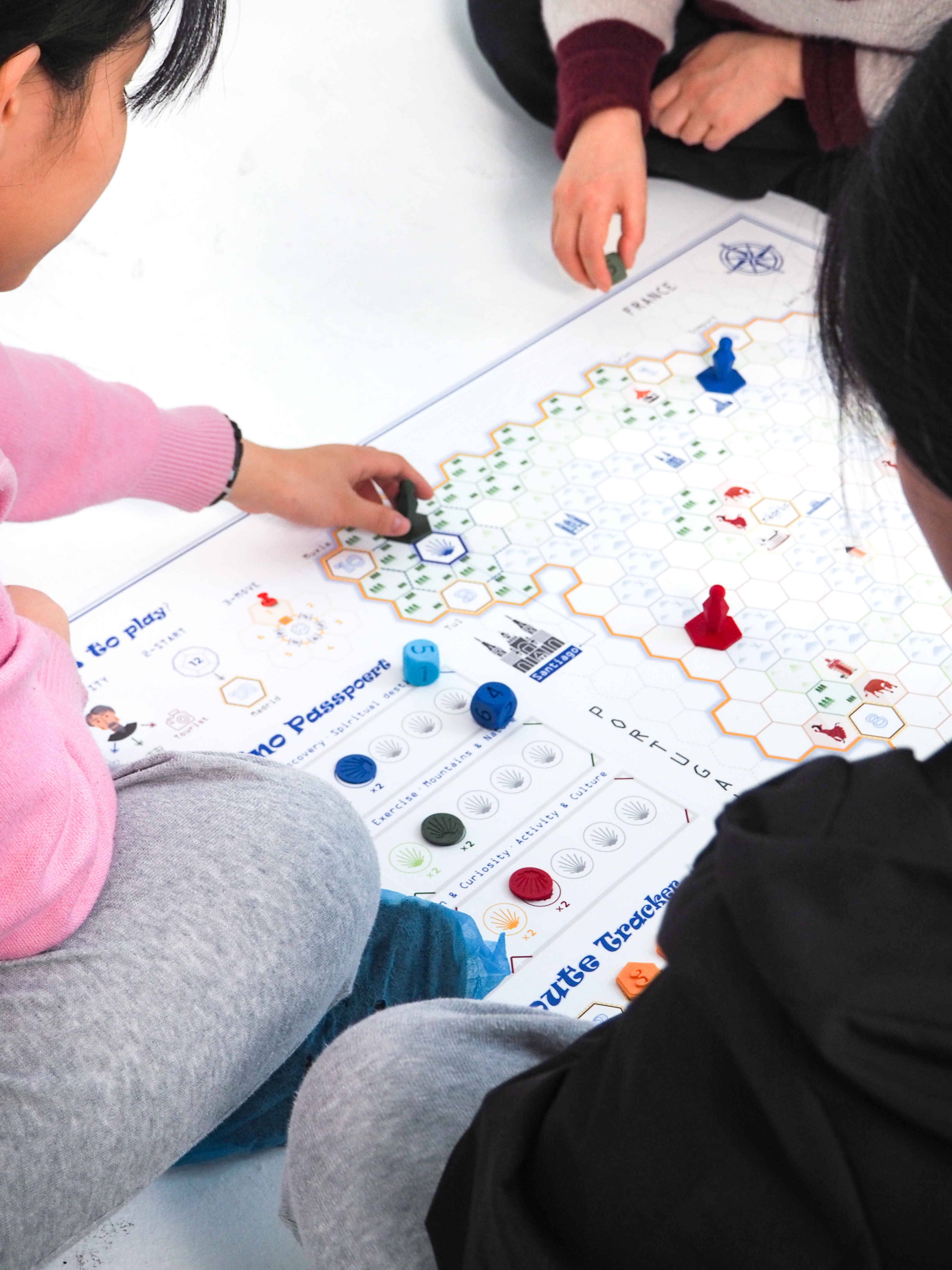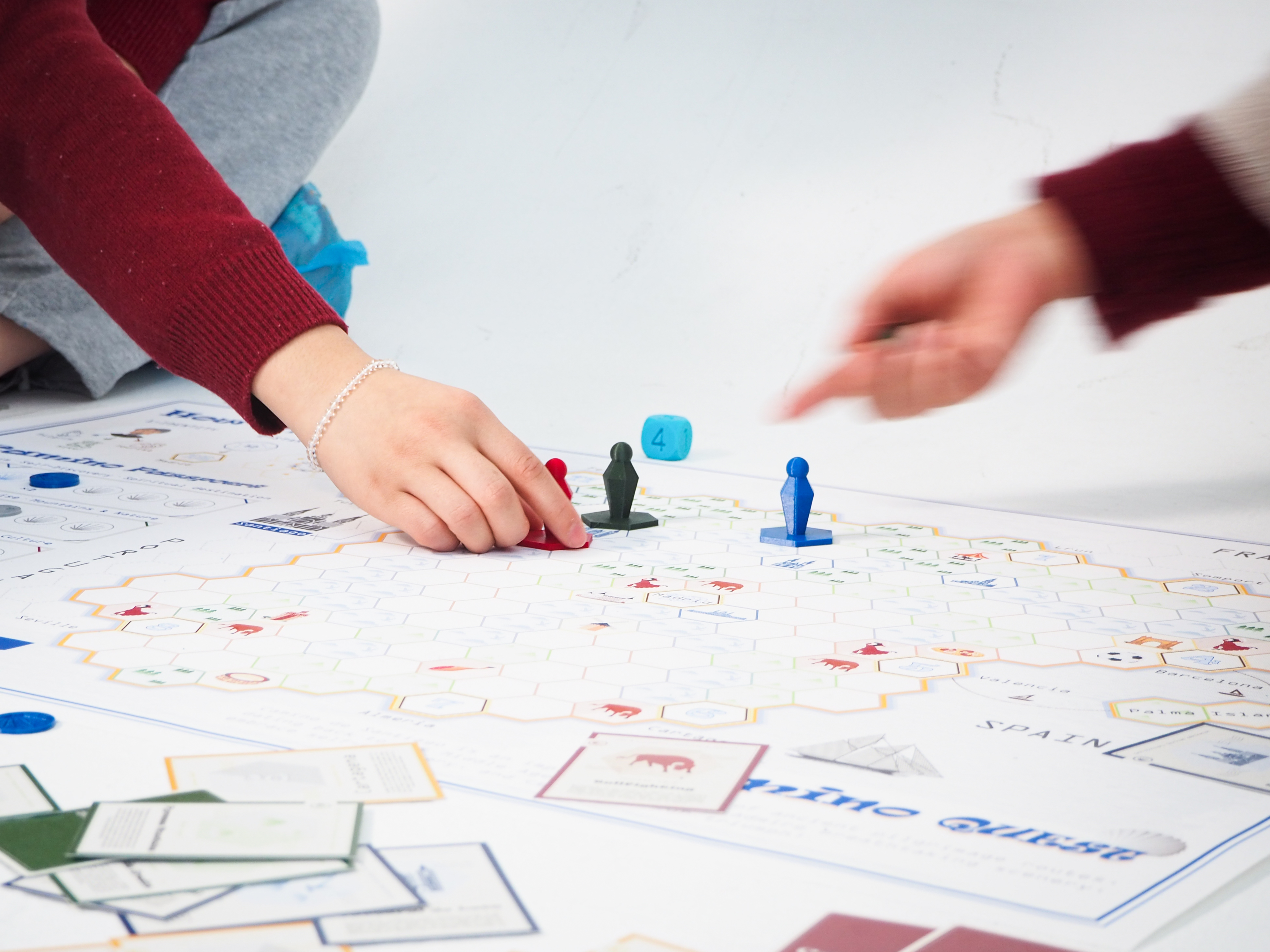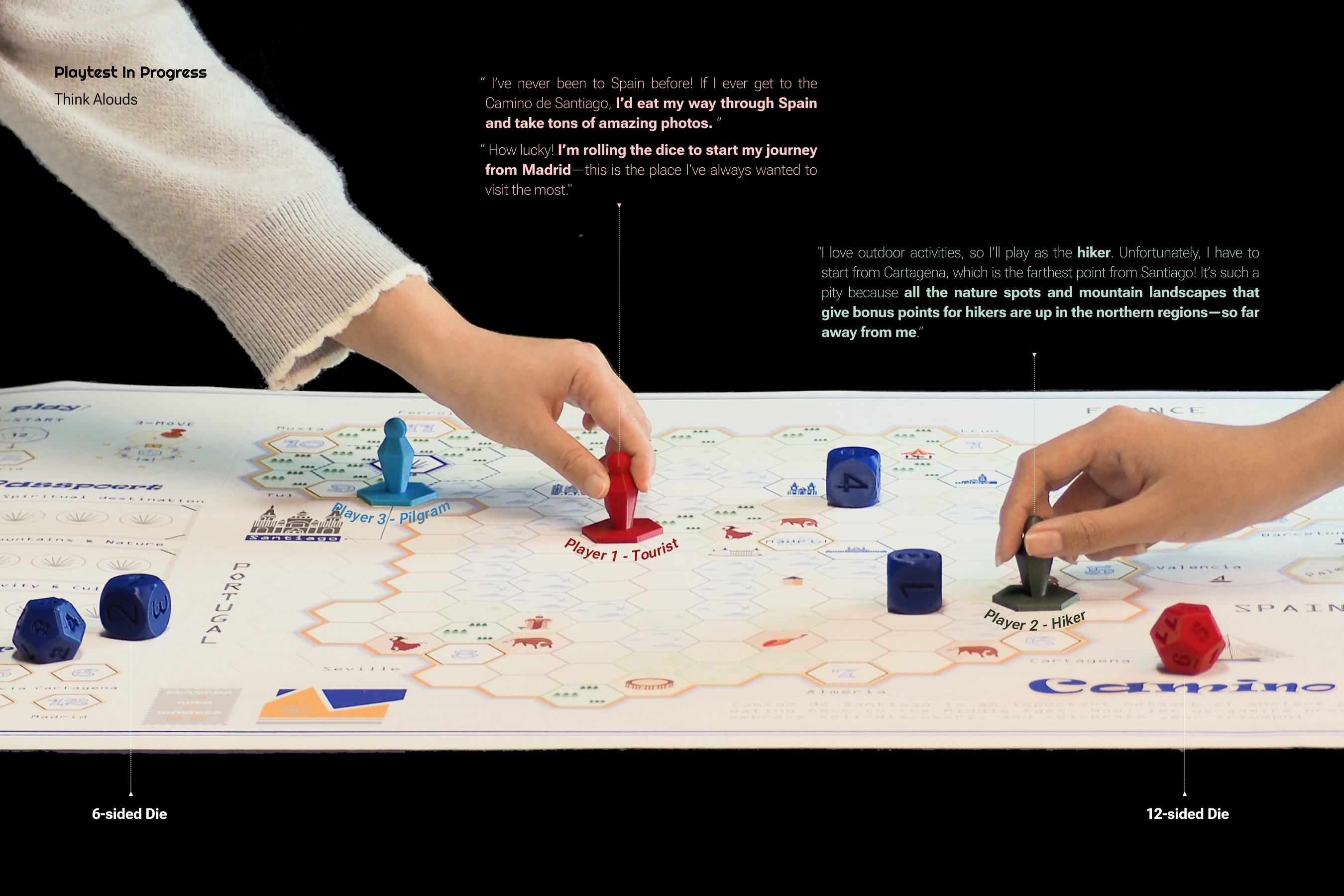
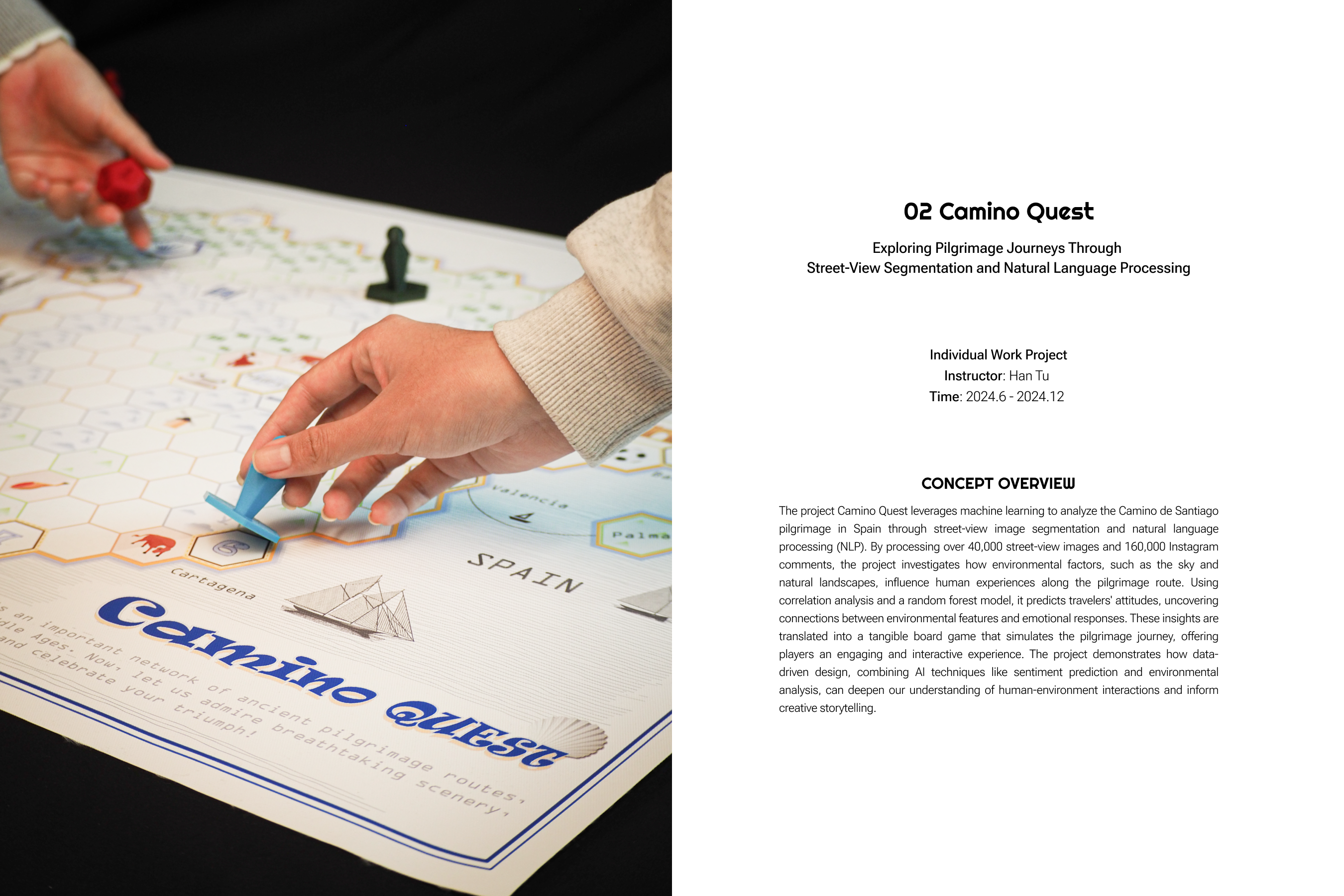
Camino Quest is a data-driven interactive board game that reinterprets the Camino de Santiago pilgrimage through machine learning and embodied play.
By analyzing over 20,000 street-view images and 160,000 Instagram comments, the project reveals how environmental elements—particularly the sky and surrounding landscape—shape pilgrims’ emotional and experiential journeys. These insights are translated into a physical board game that allows players to simulate and reflect on the pilgrimage through strategic movement and chance.
The Camino de Santiago is not only a physical journey but also a deeply emotional and environmental experience. While existing studies often focus on historical or cultural aspects of the pilgrimage, less attention has been paid to how environmental factors influence human perception and memory along the route.
This project explores the question:
How can data-driven analysis of environmental imagery and social media narratives be transformed into an interactive system that communicates human–environment relationships?
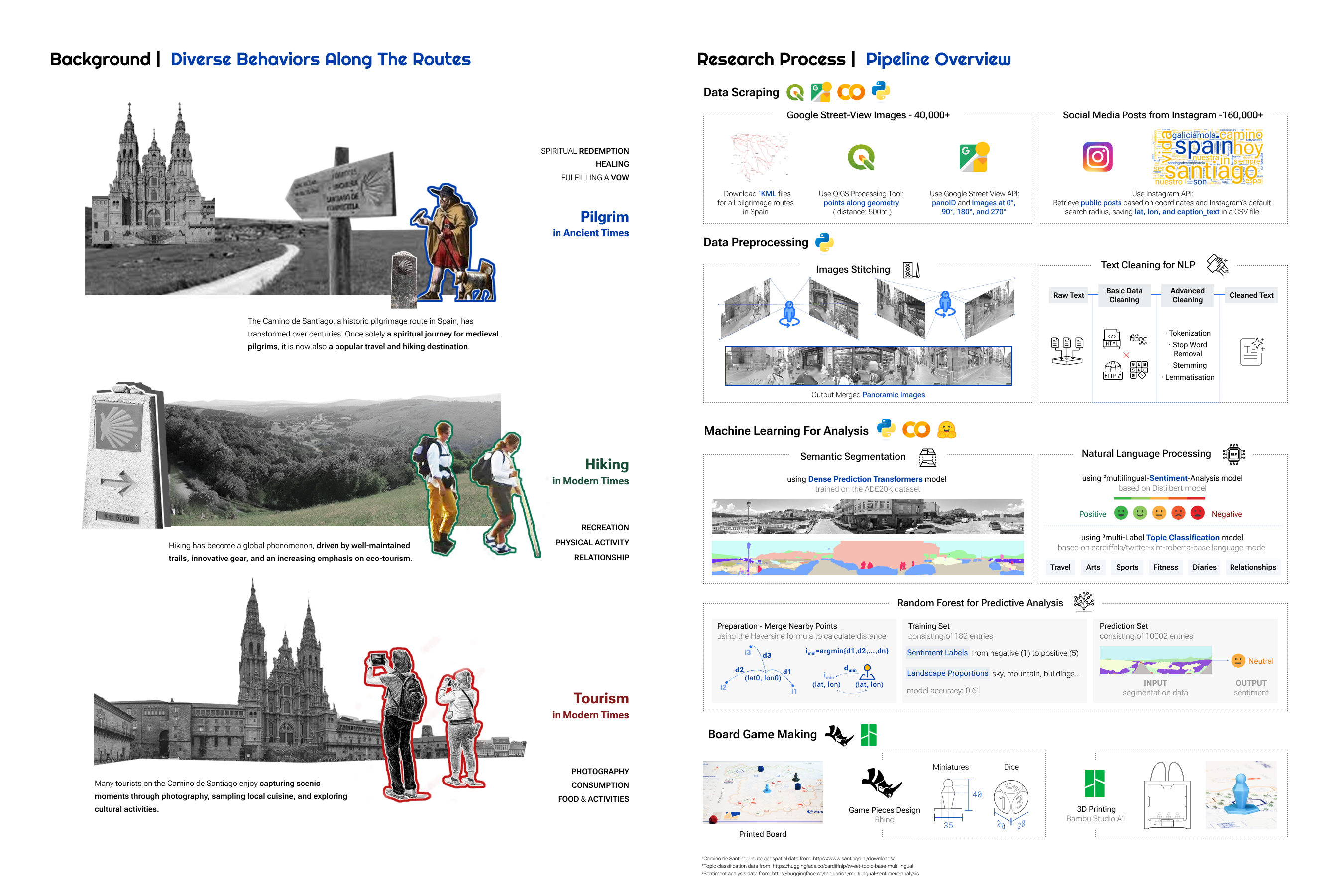
To uncover patterns in pilgrims’ experiences, the project employed a multi-modal data analysis pipeline:
-
Street-view image segmentation
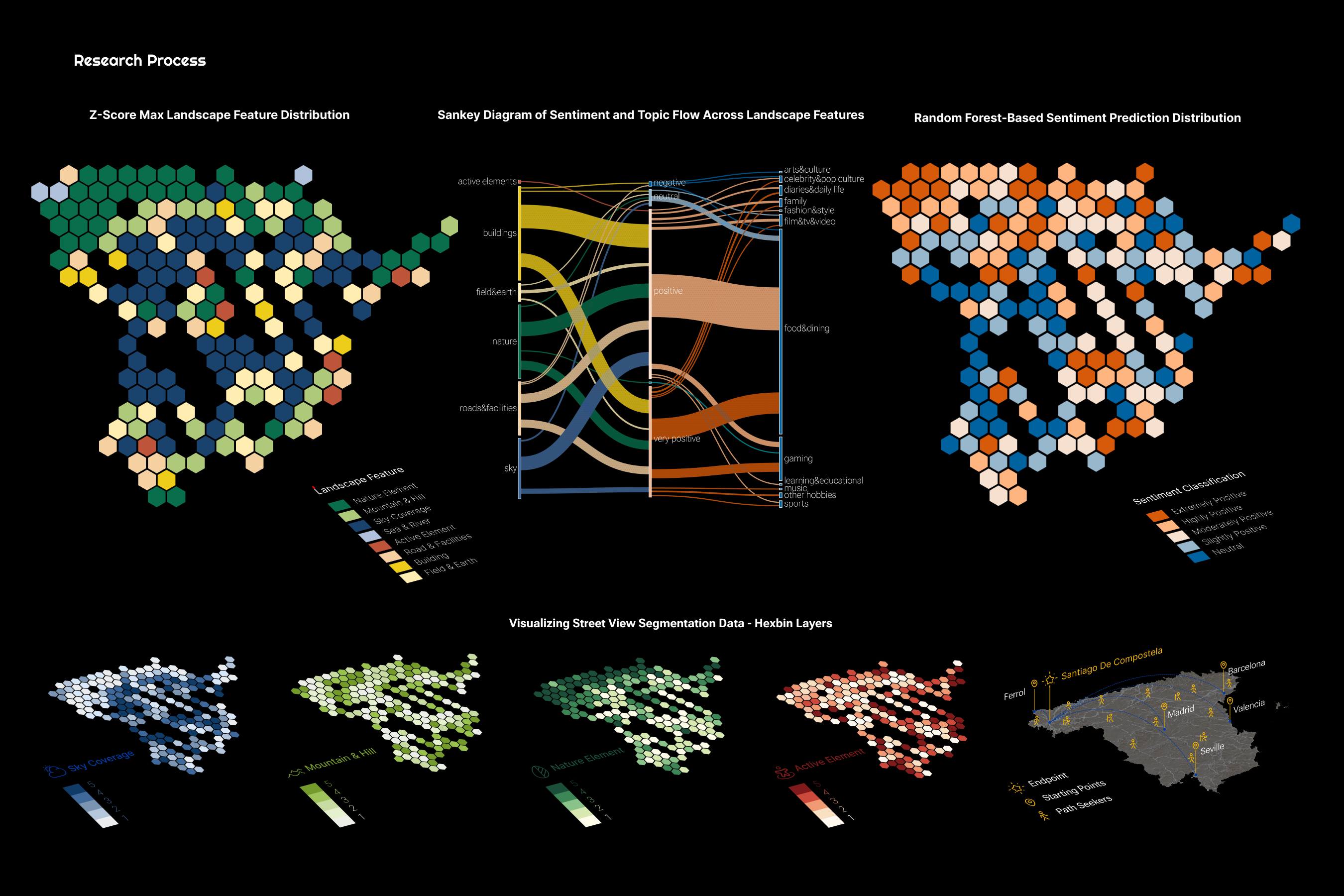
Over 20,000 images were analyzed to identify recurring environmental elements such as sky, vegetation, buildings, and road conditions. -
Natural Language Processing (NLP)
160,000 Instagram comments were processed to extract emotional keywords and experiential descriptions associated with different segments of the route.
By correlating visual features with emotional language, the analysis revealed how environmental conditions—especially openness of the sky—consistently shaped pilgrims’ reported experiences.
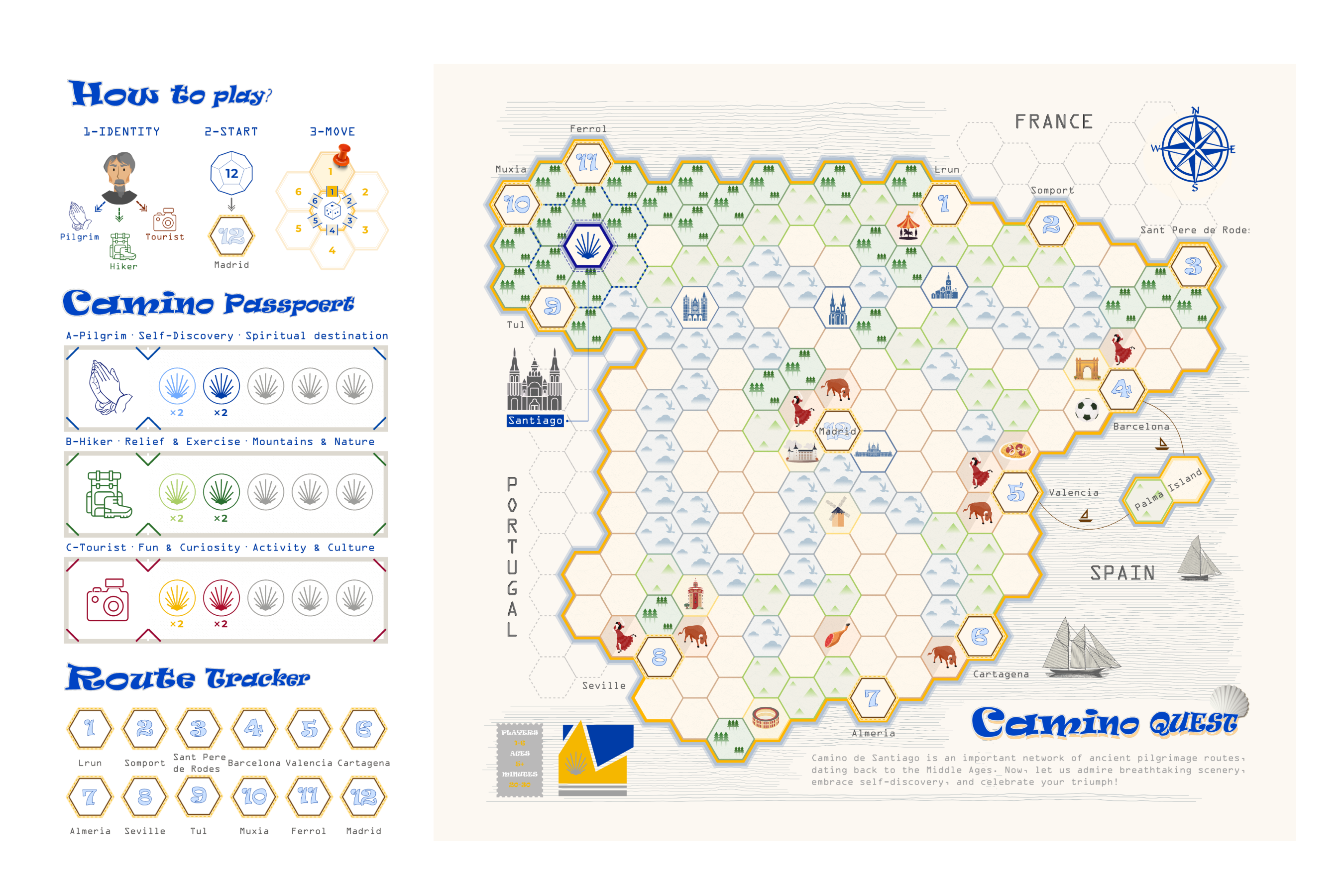
Rather than presenting the findings as charts or dashboards, the project translates data insights into embodied interaction.
The board game mechanics were designed to reflect:
- Environmental variability along the route
- Emotional fluctuations experienced by pilgrims
- The balance between chance, endurance, and decision-making
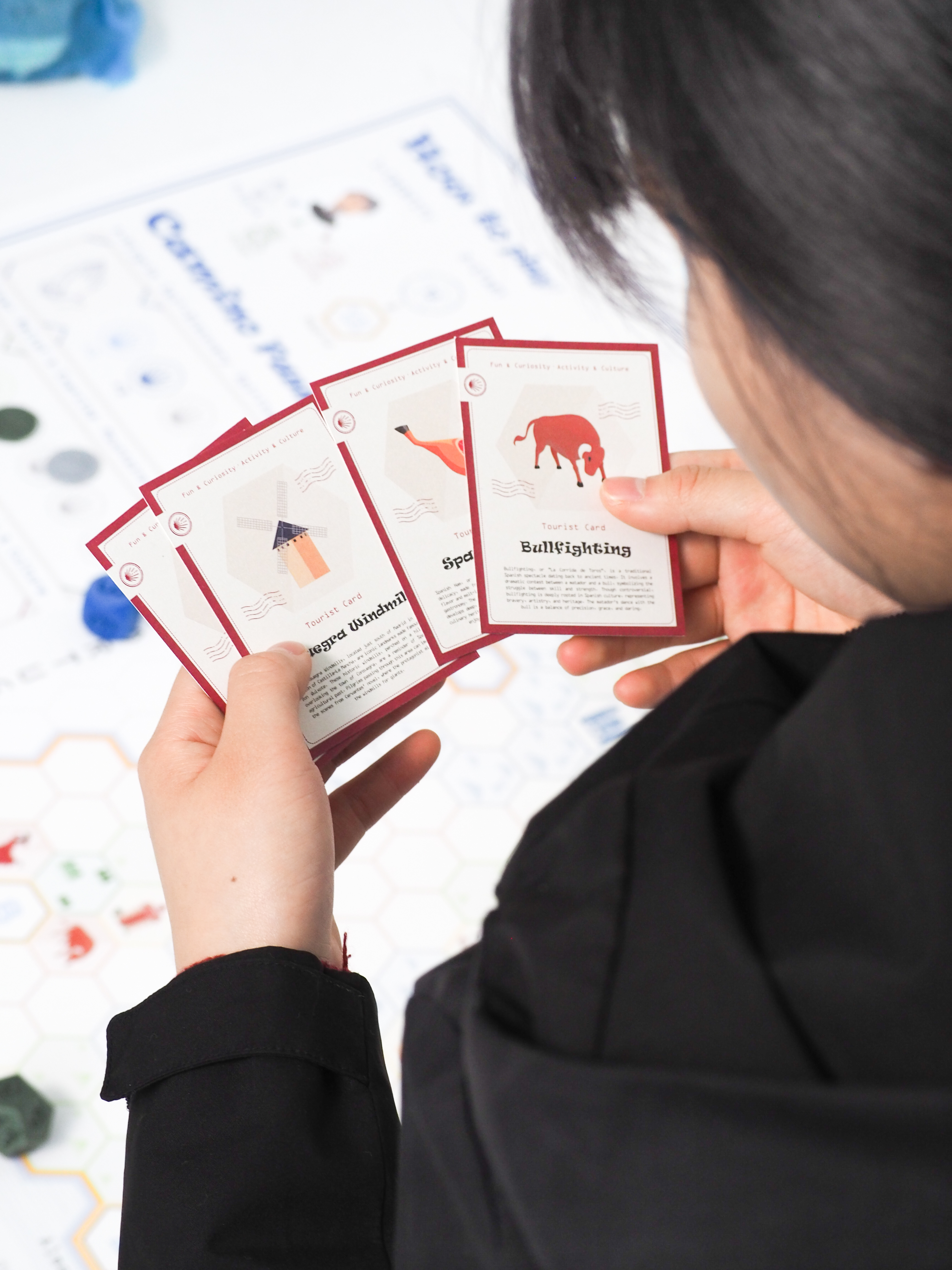
Game elements such as terrain cards, event triggers, and movement constraints are directly mapped from the data analysis, allowing players to feel the journey rather than simply observe it.
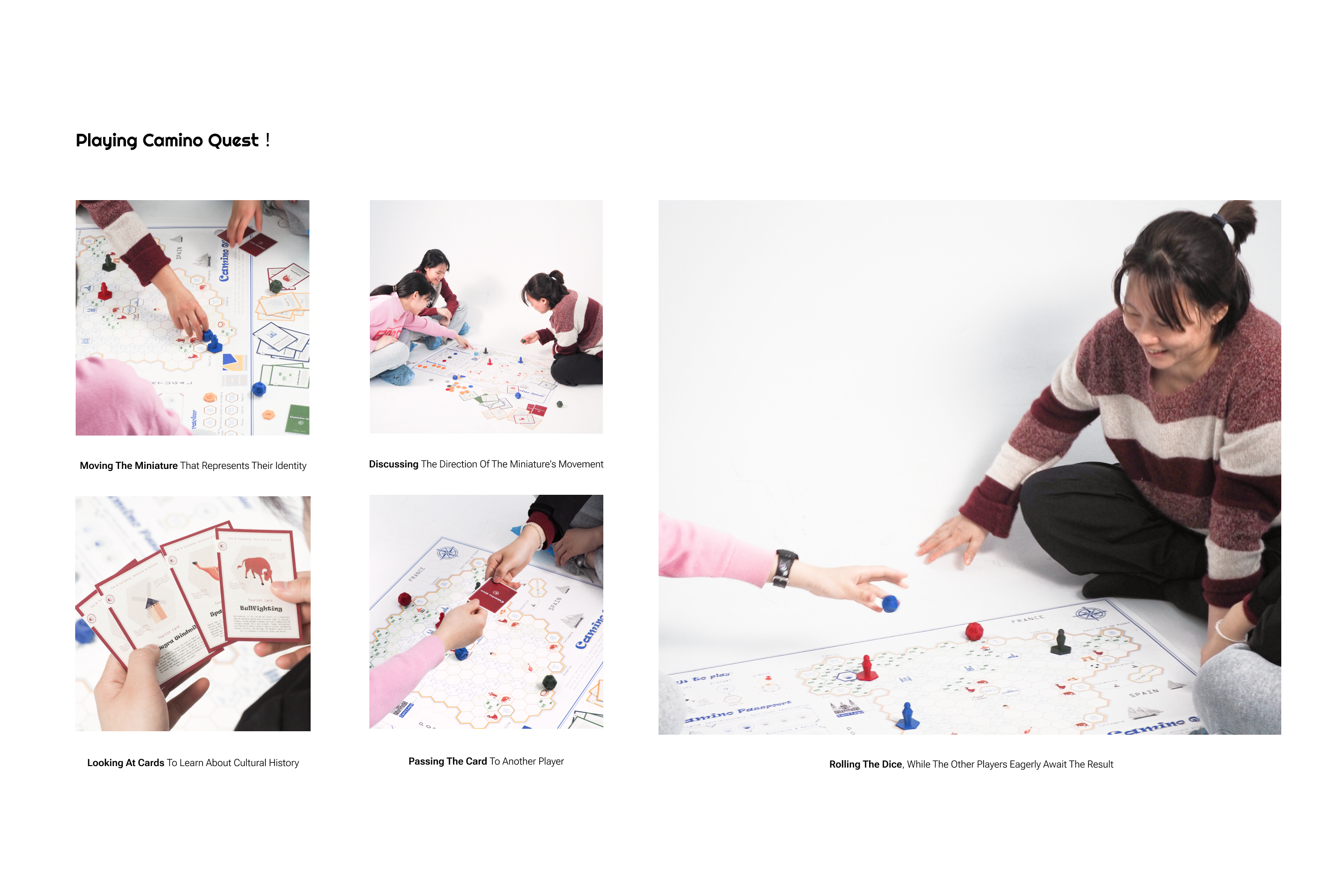
The final outcome is a playable board game that:
- Simulates the pilgrimage experience through data-informed mechanics
- Encourages reflection on the relationship between environment and emotion
- Demonstrates how machine learning insights can be embedded into tangible interactive systems
The project positions the board game as both a research artifact and a design object, bridging computational analysis and human-centered interaction.
This project reshaped my understanding of how data-driven design can move beyond visualization toward experiential communication.
Key takeaways include:
- Machine learning can inform design decisions without dictating form
- Physical interaction can make abstract data emotionally legible
- Translating analysis into play requires careful abstraction, not literal representation
If extended further, the system could evolve into a digital–physical hybrid platform that adapts gameplay based on real-time environmental data.