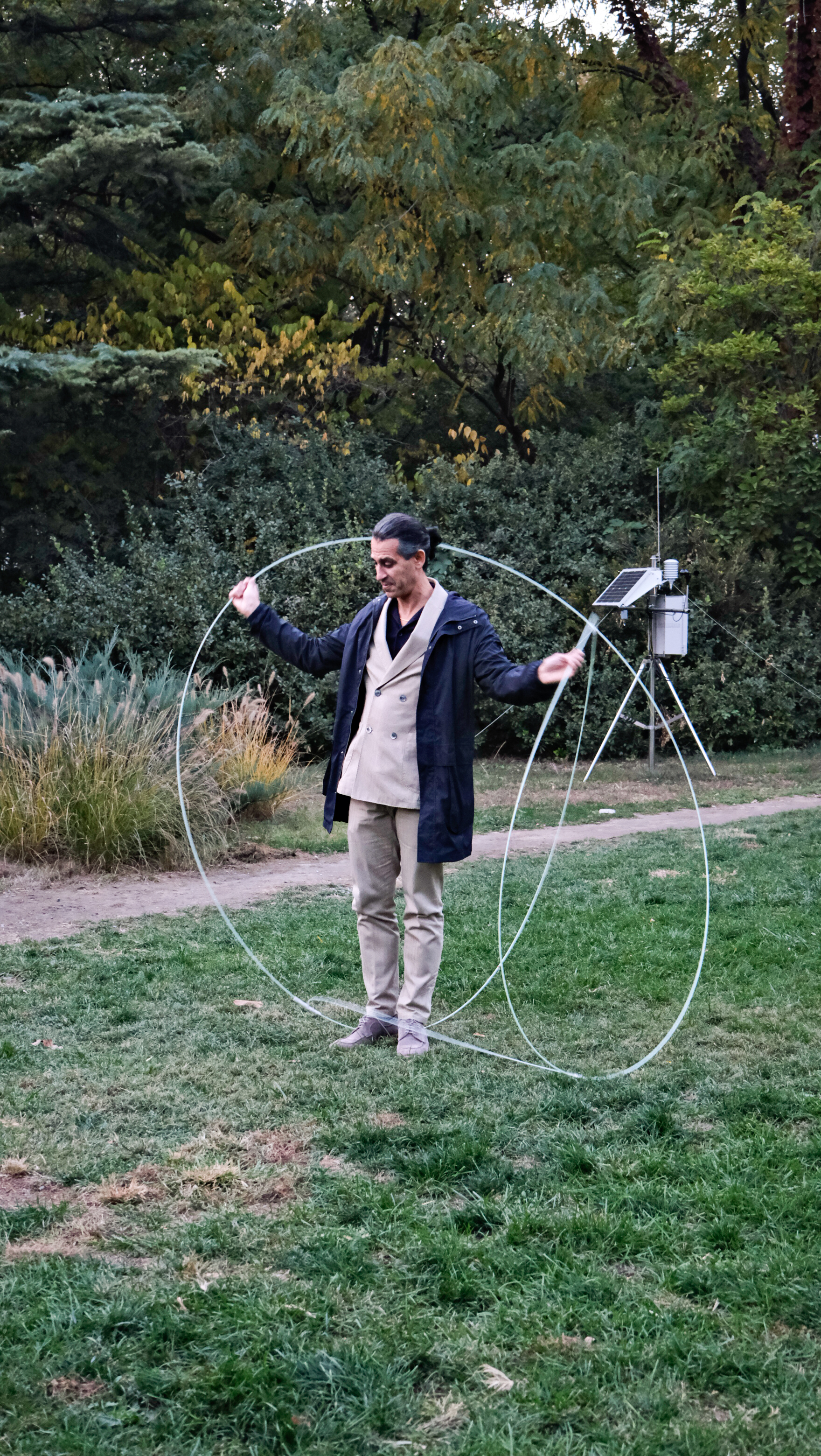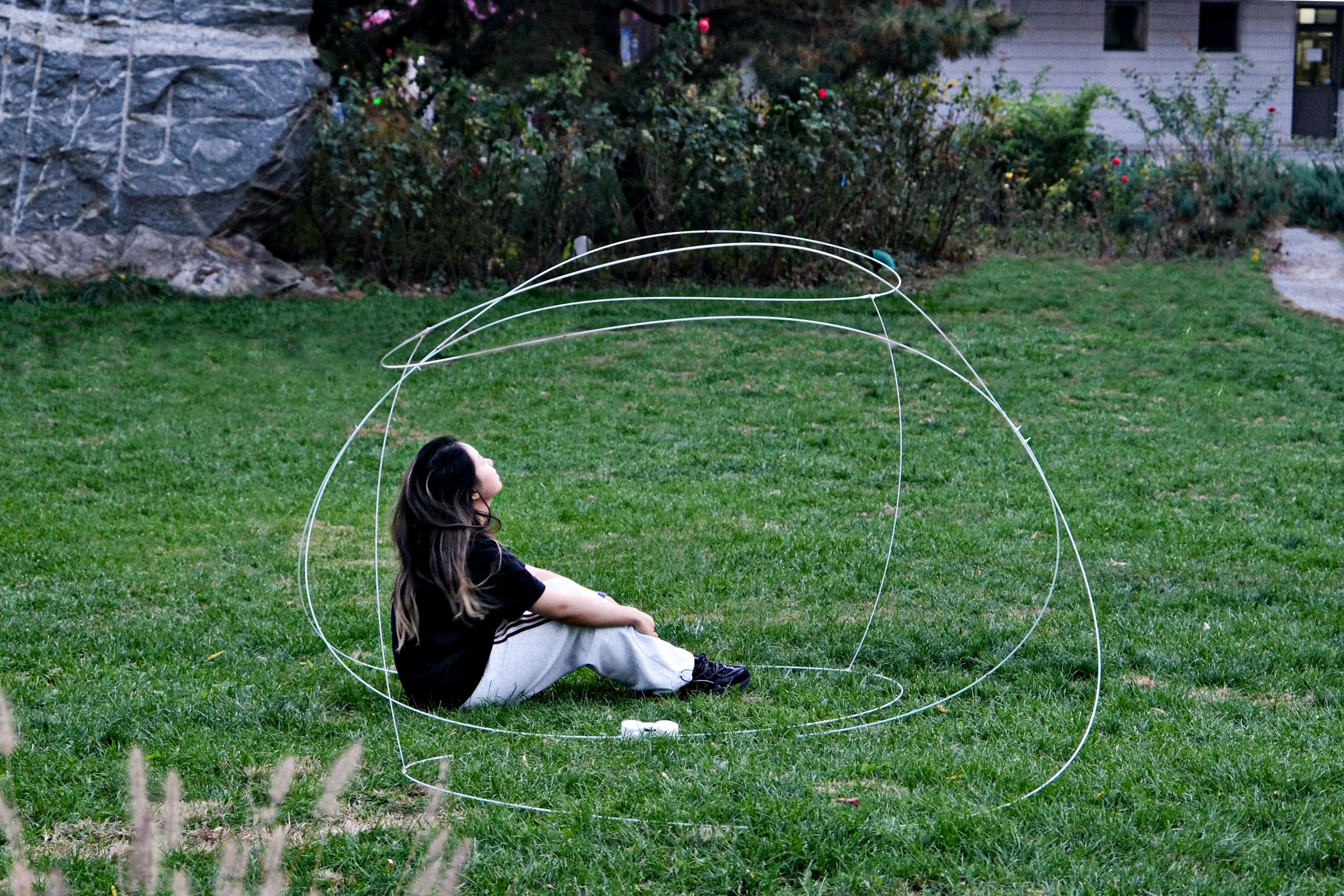
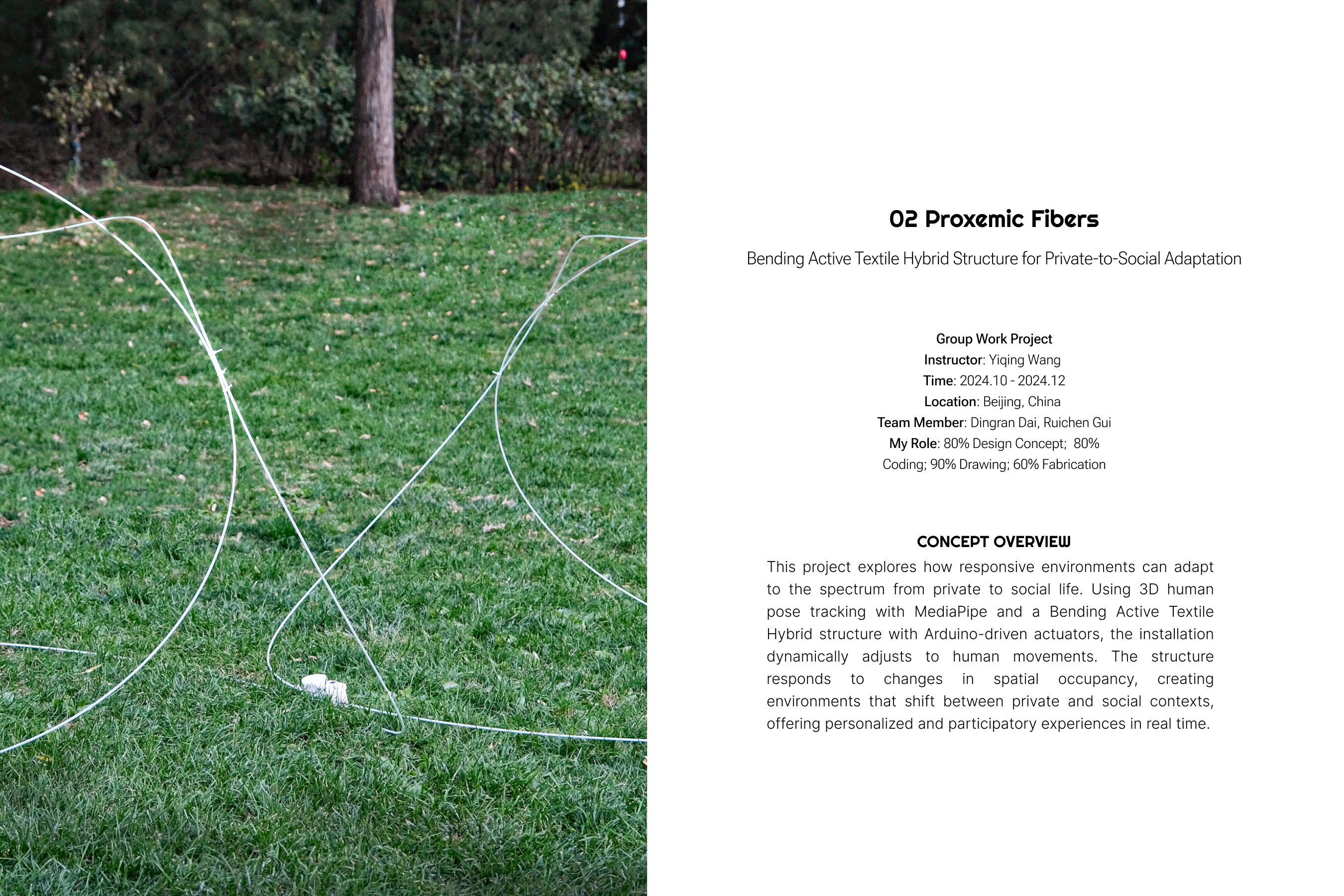
Proxemic Fibers is a responsive architectural installation that explores how physical environments can adapt to human proximity and social behavior.
By combining real-time body tracking with an adaptive tension structure, the system dynamically transforms its spatial morphology in response to human movement. Inspired by proxemics theory, the project investigates how environments can shift between private and social states, creating an embodied dialogue between people and space.
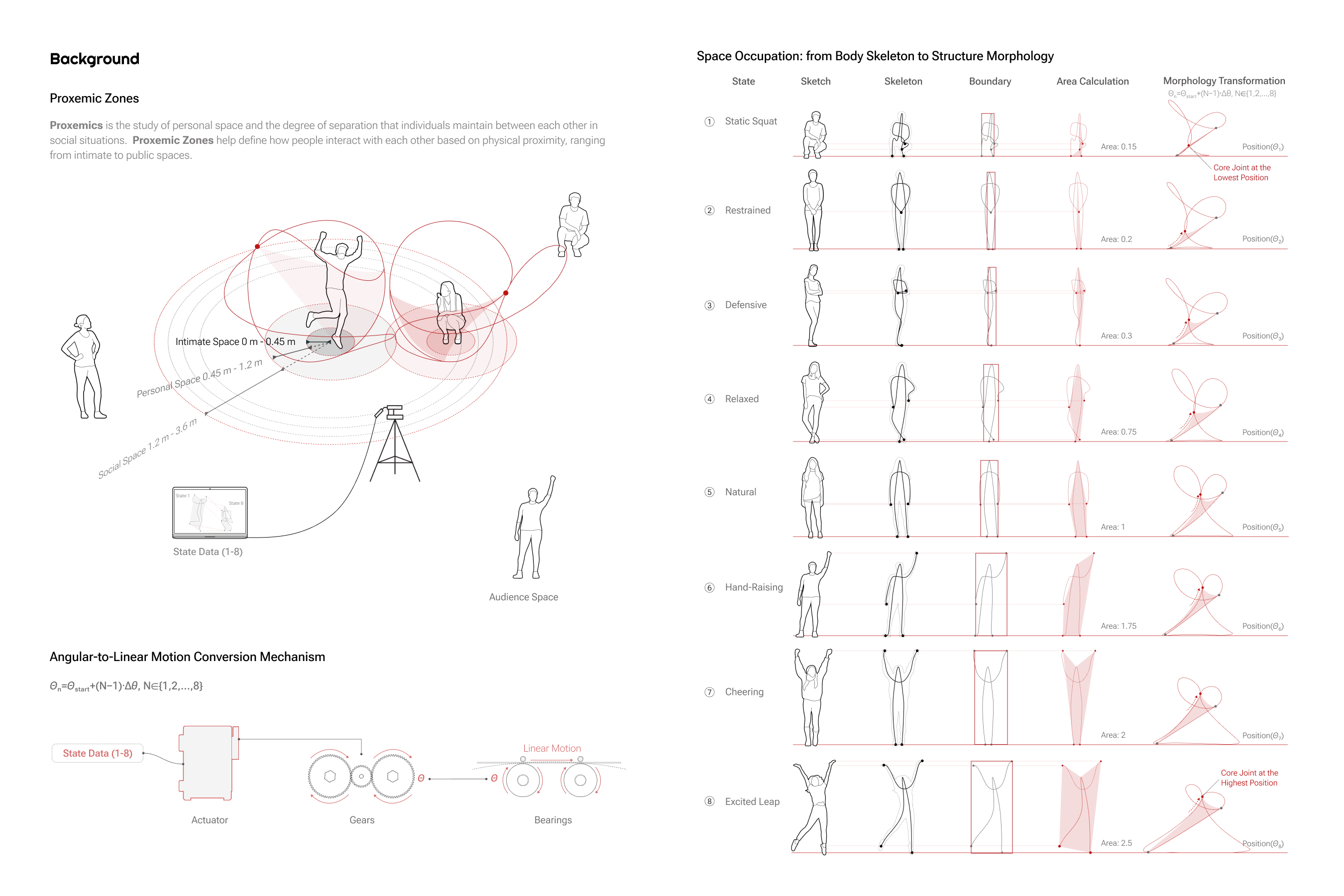
Proxemics is the study of how humans perceive and negotiate personal space in social contexts. Different distances—intimate, personal, social, and public—shape how people move, interact, and feel within an environment.
This project builds on the question:
Can architectural structures physically respond to human proxemic behavior, rather than passively containing it?
By translating bodily posture and distance into spatial deformation, the installation makes invisible social boundaries tangible.
The system interprets human body posture and movement as spatial input. Using body skeleton tracking, key joint positions are extracted and translated into control signals that drive a tension-based structural system.
Core principles include:
- Proximity-driven transformation: Closer interaction produces tighter, more enclosed spatial forms
- Gradual adaptation: Structural change occurs continuously rather than through discrete states
- Legibility of response: Users can intuitively understand how their movement affects the environment
The structure acts as an active mediator between individual presence and collective space.
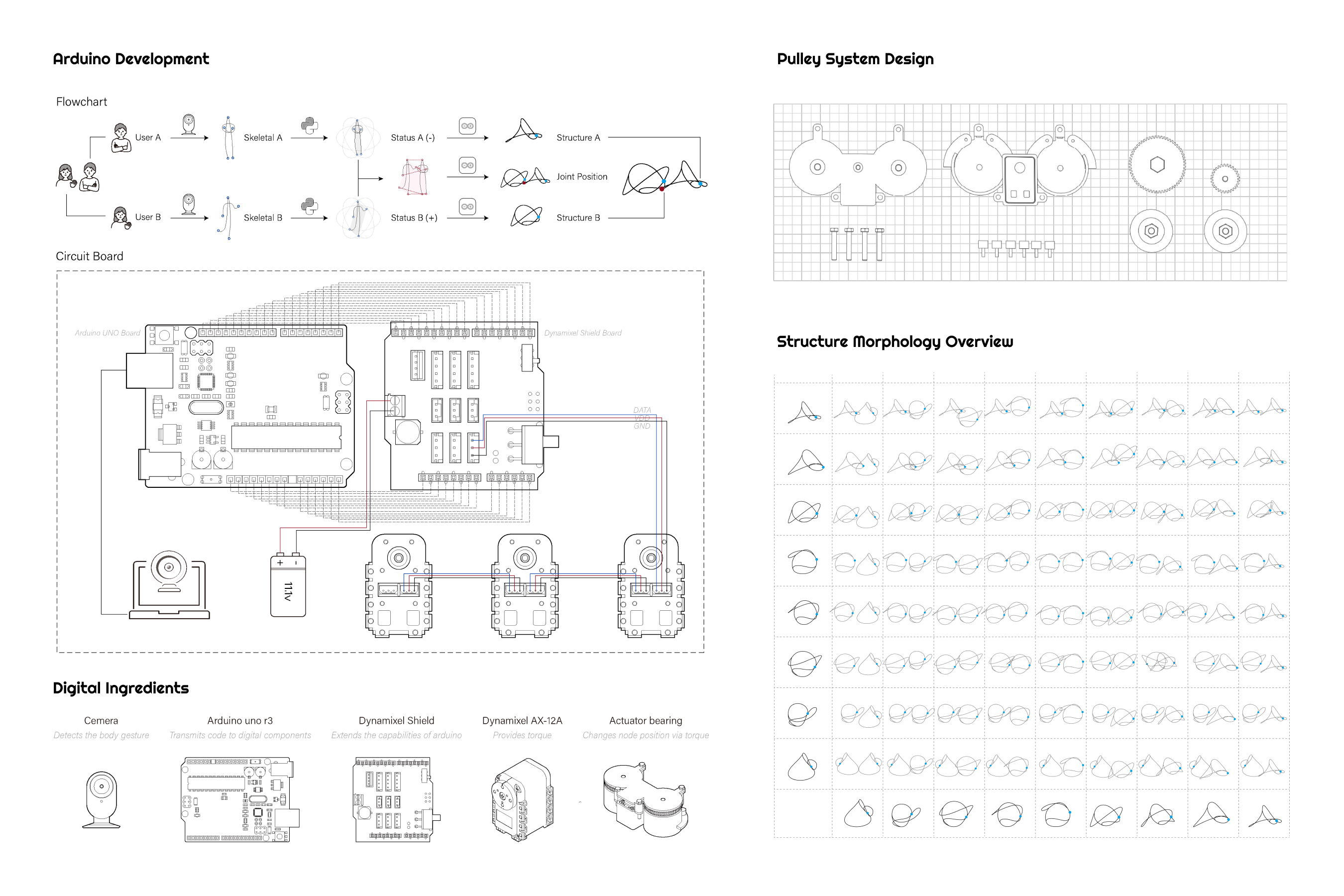
The installation integrates digital sensing with physical actuation:
-
Sensing
- Camera-based body tracking
- Skeleton joint data extracted in real time
-
Control
- Arduino-based control logic
- Mapping body states to actuator positions
-
Actuation
- Three Arduino-driven motors
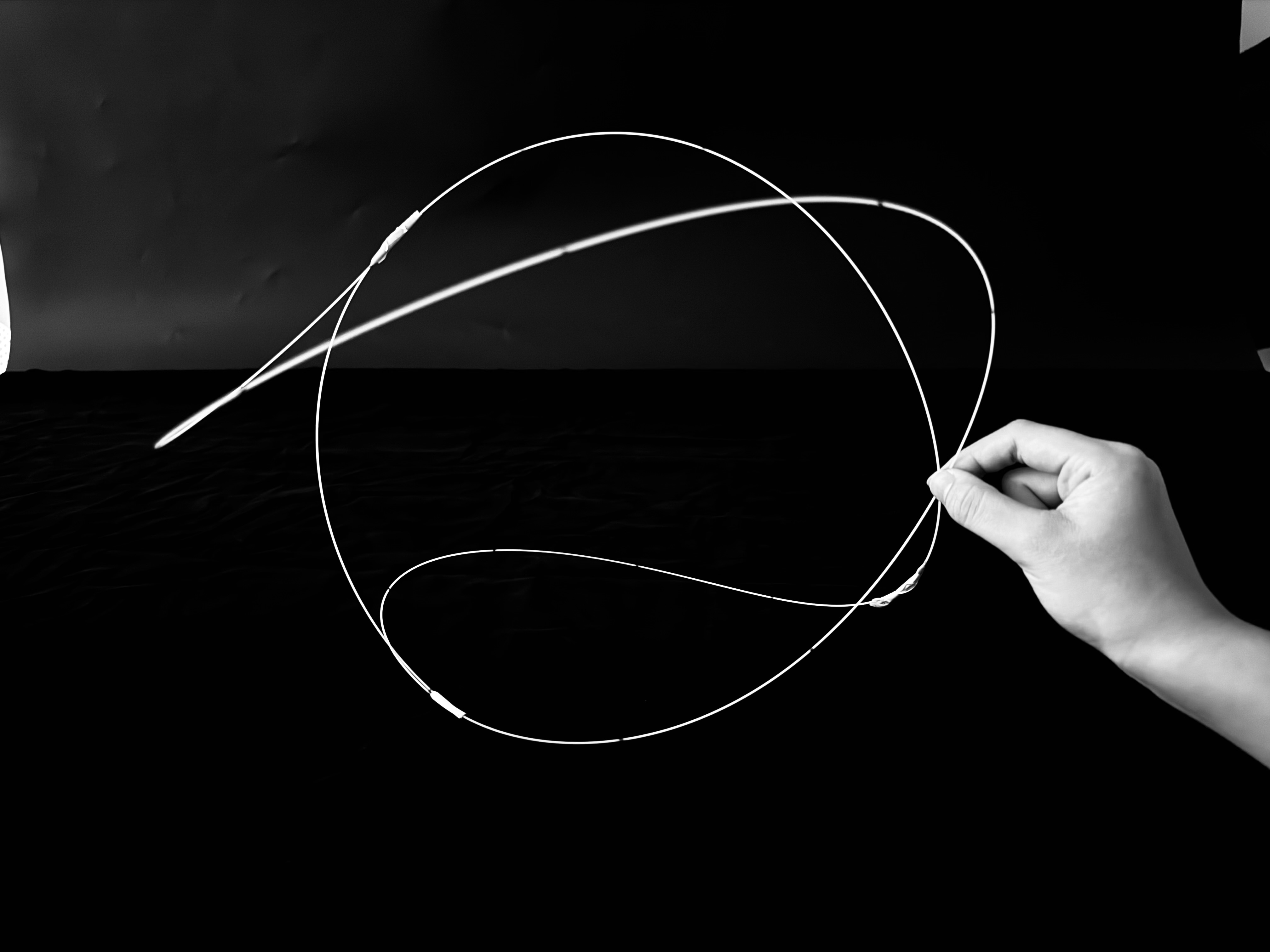
- Pulley and bearing system converting rotational motion into linear tension changes
This angular-to-linear motion conversion enables smooth, continuous deformation of the fiber-based structure.
The adaptive system supports a wide range of spatial configurations. Variations in body posture—such as standing, crouching, or raising arms—produce distinct tension patterns, resulting in evolving spatial envelopes.
Morphological studies demonstrate how:
- Increased social engagement expands the structure outward
- Defensive or restrained postures contract spatial boundaries
- Collective movement introduces complex, emergent forms
These transformations visualize social dynamics through physical motion.
Participants encounter the structure without explicit instructions. Through exploration, they gradually learn how their movements influence spatial behavior.
As multiple users interact simultaneously, the system negotiates competing inputs, highlighting the tension between individual control and collective space-making.
The experience emphasizes bodily awareness and social negotiation rather than goal-oriented interaction.
The project results in:
- A full-scale adaptive tension installation
- A physical computing system linking body data to structural behavior
- A series of morphological studies demonstrating proxemic-driven adaptation
Proxemnic Fibers reframes responsive architecture as an experiential and participatory system rather than a purely technical construct.
This project deepened my understanding of interaction design beyond screens and interfaces.
Key insights include:
- Physical structures can communicate social dynamics through motion
- Continuous feedback fosters intuitive human–environment interaction
- Responsive systems are most effective when their logic is immediately legible
Future iterations could explore multi-modal sensing and finer-grained social differentiation within shared environments.